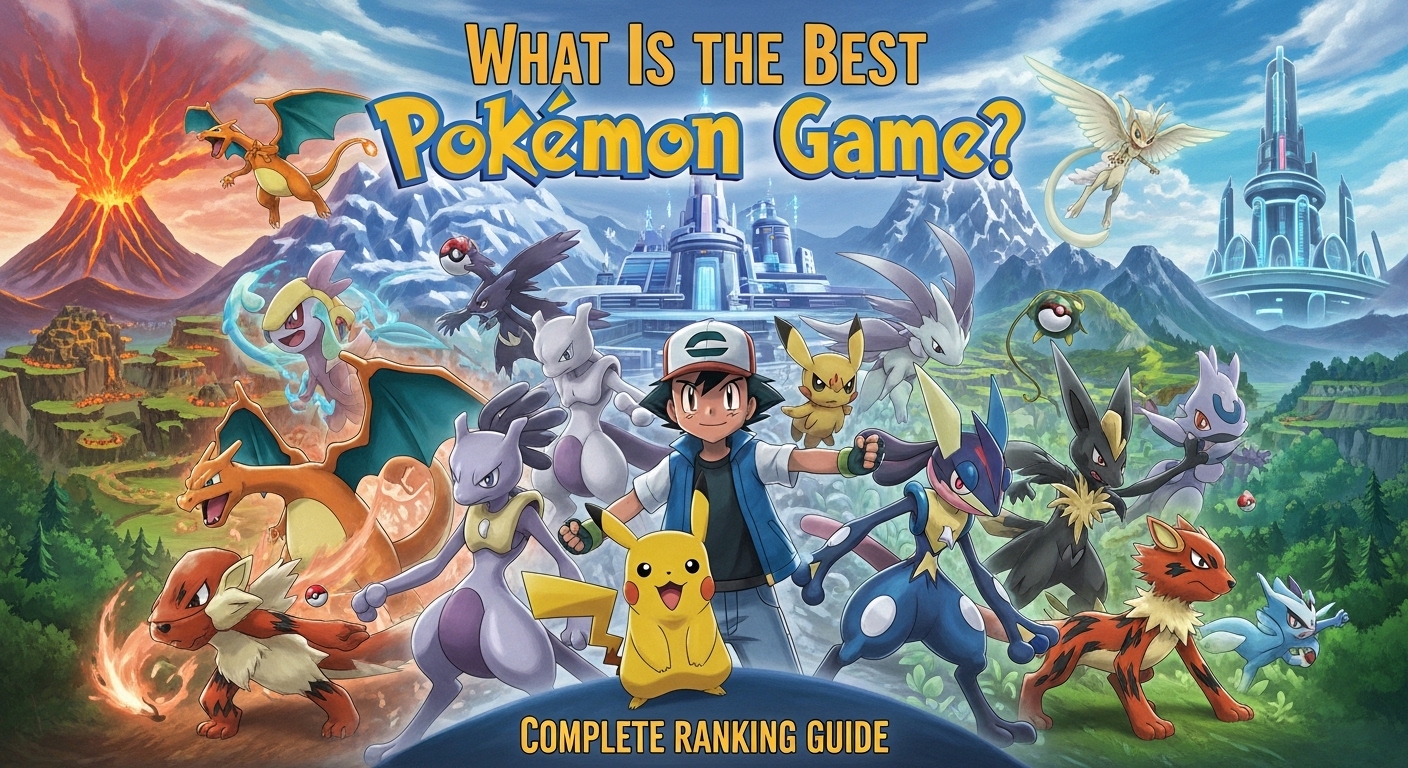
The best Pokémon game depends on gameplay depth, long-term replay value, and how well it improves the core mechanics of the series. The titles below are ranked based on sales data, gameplay systems, fan adoption, and lasting relevance.
Pokémon Red and Pokémon Blue
Pokémon Red and Blue started the global success of the Pokémon franchise.
These games introduced players to the Kanto region and the original 151 Pokémon. The gameplay system created the foundation for all later titles in the series.
Key gameplay elements:
- Turn-based battles
- Pokémon trading between players
- Gym leader progression
- Exploration of towns and routes
The games were released for the Game Boy and became one of the best-selling video game releases in history.
Best suited for:
- Classic RPG players
- Retro gaming fans
- Series newcomers
- Collectors
Pokémon Gold and Pokémon Silver
Pokémon Gold and Silver expanded the series with major improvements.
These games introduced the Johto region and added 100 new Pokémon. They also added a real-time clock system that changed gameplay based on the time of day.
Important improvements:
- Day and night cycle
- Breeding mechanics
- Two full regions to explore
- New Pokémon types
The ability to revisit the Kanto region made these games much larger than earlier releases.
Best suited for:
- Players who enjoy long adventures
- Completion-focused gamers
- RPG fans
Pokémon HeartGold and Pokémon SoulSilver
Pokémon HeartGold and SoulSilver are widely considered the most polished remakes in the franchise.
These games rebuilt Gold and Silver using modern graphics and updated systems.
Key features:
- Updated battle mechanics
- Expanded story content
- Touchscreen controls
- Improved graphics
The games also included a pedometer accessory that allowed players to train Pokémon while walking.
Best suited for:
- Players who want classic gameplay with modern improvements
- Fans of exploration
- Long-term collectors
Pokémon Emerald
Pokémon Emerald refined the Hoenn region introduced in Ruby and Sapphire.
The game added new story content and improved battle systems.
Major gameplay strengths:
- Battle Frontier challenge area
- Expanded legendary Pokémon storyline
- Improved trainer battles
- Strategic combat mechanics
The Battle Frontier remains one of the most complex post-game systems in Pokémon history.
Best suited for:
- Competitive players
- Strategy-focused gamers
- Advanced trainers
Pokémon Platinum
Pokémon Platinum improved the Sinnoh region and fixed performance issues from earlier versions.
The game added new locations and faster gameplay speed.
Important features:
- Expanded story events
- Improved Pokémon availability
- Better battle pacing
- Enhanced graphics
Platinum is often considered the definitive version of the fourth-generation Pokémon games.
Best suited for:
- Players who want balanced gameplay
- Story-focused fans
- Long-term progression players
Pokémon Black and Pokémon White
Pokémon Black and White introduced one of the most story-driven Pokémon experiences.
The games focused on the Unova region and featured a deeper narrative than previous titles.
Key gameplay elements:
- Fully new Pokémon roster
- Animated battle sprites
- Story-driven villain team
- Seasonal changes
The storyline explored themes of Pokémon ownership and ethics.
Best suited for:
- Narrative-focused players
- RPG fans
- Series veterans
Pokémon Black 2 and Pokémon White 2
Pokémon Black 2 and White 2 were the first direct sequels in the Pokémon series.
These games continued the story of the Unova region.
Major strengths:
- Expanded Pokédex
- New towns and areas
- Post-game challenge mode
- Competitive battle improvements
The sequel structure allowed players to see the long-term effects of earlier story events.
Best suited for:
- Experienced Pokémon players
- Competitive trainers
- Story-focused gamers
Pokémon X and Pokémon Y
Pokémon X and Y introduced full 3D graphics to the main series.
These games were released for the Nintendo 3DS.
Key innovations:
- Mega Evolution mechanic
- Online trading system
- Character customization
- New Fairy-type Pokémon
The shift to 3D graphics marked a major technical milestone.
Best suited for:
- Modern Pokémon players
- Online multiplayer users
- Casual gamers
Pokémon Omega Ruby and Pokémon Alpha Sapphire
Pokémon Omega Ruby and Alpha Sapphire updated the Hoenn region with modern mechanics.
Important improvements:
- Updated graphics engine
- Expanded story events
- Flying exploration system
- Mega Evolution battles
The games kept the original gameplay while adding new features.
Best suited for:
- Players who enjoy remakes
- Exploration fans
- RPG enthusiasts
Pokémon Sun and Pokémon Moon
Pokémon Sun and Moon changed the traditional gym structure.
The games introduced island challenges instead of gym battles.
Key gameplay elements:
- Regional Pokémon forms
- Story-focused gameplay
- New battle mechanics
- Island exploration
The Alola region design emphasized narrative progression.
Best suited for:
- Story-driven players
- Exploration fans
- Modern RPG players
Pokémon Ultra Sun and Pokémon Ultra Moon
Pokémon Ultra Sun and Ultra Moon expanded the original Sun and Moon experience.
Major additions:
- New Pokémon forms
- Expanded storyline
- Ultra Wormhole exploration
- Additional challenges
These games provide more content than the original versions.
Best suited for:
- Completion-focused players
- Advanced trainers
- Competitive players
Pokémon Sword and Pokémon Shield
Pokémon Sword and Shield marked the main series debut on the Nintendo Switch.
Important features:
- Wild Area open environments
- Online multiplayer raids
- New Pokémon species
- Dynamic camera controls
The games introduced a semi-open-world design.
Best suited for:
- Modern players
- Online multiplayer fans
- Casual trainers
Pokémon Legends: Arceus
Pokémon Legends: Arceus introduced real-time gameplay systems.
Major gameplay systems:
- Open exploration
- Direct Pokémon catching
- Crafting mechanics
- Historical setting
The game changed how players interact with Pokémon.
Best suited for:
- Exploration-focused players
- RPG fans
- Long-term players
Pokémon Scarlet and Pokémon Violet
Pokémon Scarlet and Violet introduced the first fully open-world Pokémon structure.
Important gameplay elements:
- Non-linear story progression
- Cooperative multiplayer exploration
- Large world map
- New Pokémon abilities
The games allow players to explore freely without fixed progression order.
Best suited for:
- Open-world fans
- Multiplayer players
- Modern RPG users
