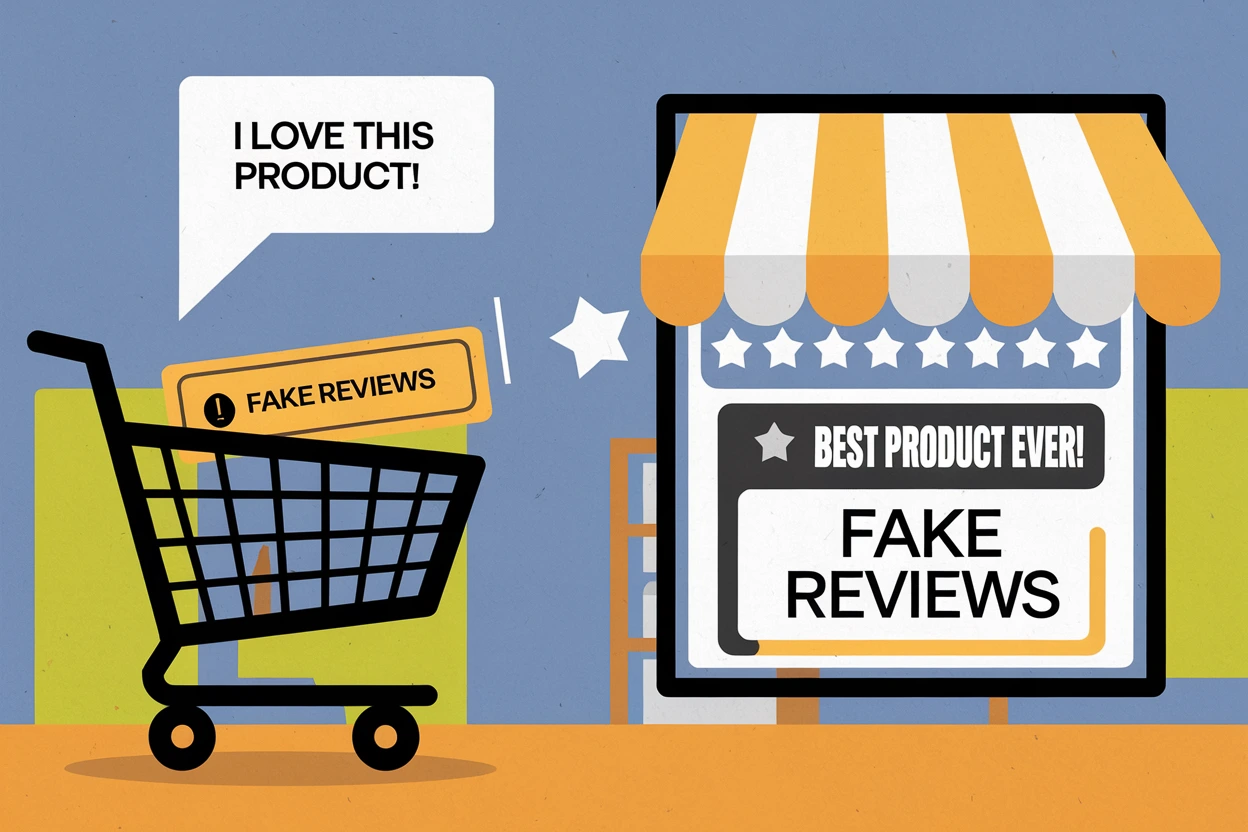
Businesses and scammers use artificial intelligence (AI) to create fake reviews that look real.
These AI-generated reviews can trick even the smartest shoppers. This makes it harder to know which reviews to trust.
How AI is Changing Online Reviews
AI tools can now write human-like text. They can create fake reviews in seconds. These reviews often have perfect grammar, emotional words, and even personal stories. AI can also copy the style of real customers, making the fake reviews hard to spot.
Some companies use AI to make their products look better. They generate many positive reviews to boost their ratings. Others may use AI to write negative reviews about competitors.
This can harm businesses and mislead customers. You can learn more about the dangers of AI in our article on The Dark Side of AI Chatbots, where we explore how AI can manipulate human perception.
Why AI Fake Reviews Are a Problem
Fake reviews affect consumers in many ways:
- Wasted Money – People buy products that do not match the fake positive reviews.
- Scams – Some fake reviews promote low-quality or dangerous items.
- Lost Trust – When people discover fake reviews, they stop trusting all reviews.
- Unfair Competition – Honest businesses struggle when competitors use fake reviews to get ahead.
How to Spot AI-Generated Fake Reviews
AI reviews are getting better, but you can still find signs that a review is fake:
- Too Many Similar Reviews – If many reviews have the same phrases or writing style, they may be AI-generated.
- Over-the-Top Praise or Complaints – Fake reviews often sound too good or too bad.
- Lack of Specific Details – Real reviews mention small details, like packaging, shipping, or personal experience.
- Profile Red Flags – If a reviewer has only one review or uses a generic name, it might be fake.
- Check Multiple Sources – Compare reviews on different platforms. If one site has all positive reviews but others don’t, it’s suspicious.
How Companies and Platforms Fight Fake Reviews
Big companies like Amazon, Google, and Yelp are using AI to detect fake reviews. They look for unusual patterns, such as many reviews appearing at the same time.
Some platforms remove fake reviews and ban accounts that post them. Governments are also working on laws to stop fake reviews.
AI’s growing role in digital spaces also raises questions about its future impact—Can Brain-Computer Interfaces Replace Smartphones? explores how AI-driven technology is evolving.
What You Can Do as a Consumer
- Read a mix of reviews – Don’t trust only five-star or one-star reviews.
- Look at recent reviews – Fake reviews often come in bulk within a short time.
- Use review-checking tools – Websites like Fakespot or ReviewMeta analyze reviews for authenticity.
- Trust real experiences – If possible, ask friends or check forums for honest opinions.
As AI improves, fake reviews will become even harder to detect. But technology and stricter rules can help keep reviews honest. Consumers must stay alert and use smart strategies to avoid being misled.
