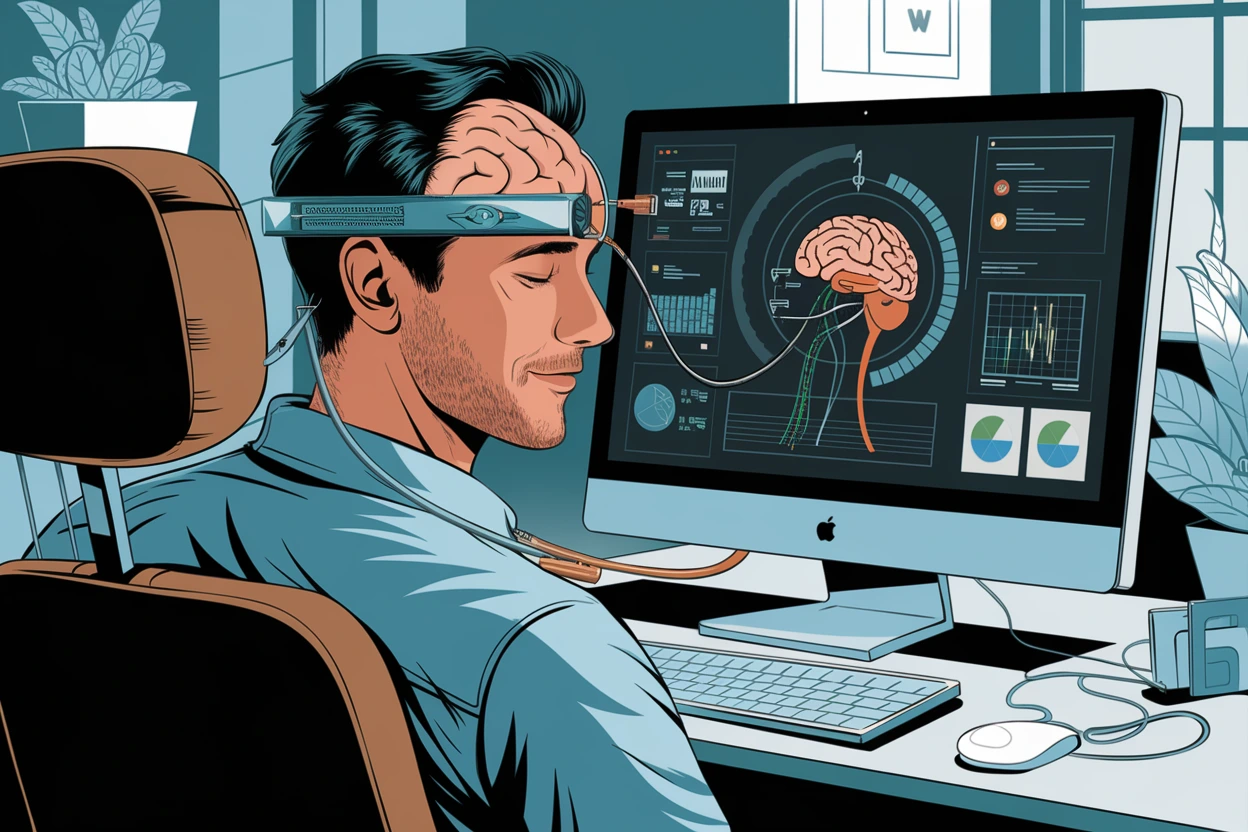
Brain-Computer Interfaces
Brain-computer interfaces are devices that create a direct communication path between the human brain and external technology without requiring physical touch.
These neural interfaces capture brain signals through sensors placed on the scalp, beneath the skin, or directly into brain tissue.
The core function of BCIs involves three main steps: signal acquisition from neural activity, processing to interpret these brain signals, and output commands that control external devices.
Modern BCI systems range from non-invasive headsets that detect general brain waves to advanced implantable microchips that can read specific neural patterns with greater precision.
Companies like Neuralink and Synchron are developing BCIs that could potentially replace smartphones by enabling users to browse the internet, send messages, or control smart home devices using only their thoughts.
The technology behind brain-computer interfaces continues to advance, bringing us closer to a world where smartphones might become obsolete.
How BCIs Could Outperform Smartphones
Brain-computer interfaces could transform our digital experience beyond what smartphones currently offer through thought-based control systems.
When I think about the potential advantages, the most striking is speed.
Neural impulses travel much faster than our fingers can type or swipe, potentially making BCIs significantly quicker for communication and data access than touchscreen devices.
The hands-free nature of neural interfaces would also dramatically improve accessibility for users with physical limitations.
Imagine controlling digital tools while cooking, driving, or during medical procedures where touching a smartphone isn’t practical.
This direct mind-to-machine connection eliminates the physical middleman of screen interactions, creating a more natural user experience.
Seamless Digital Integration
BCIs could create truly invisible computing experiences by removing visible devices from the equation.
Neural implants or wearable brain sensors might eventually replace the bulky smartphones we carry, becoming seamlessly integrated with our thought processes.
The potential for brain-computer interfaces to outperform smartphones increases as neural signal detection technology improves, bringing us closer to direct thought-based computing.
Major Technical and Practical Hurdles
Brain-computer interfaces face significant challenges before they can realistically replace smartphones in our daily lives.
The most pressing technical issue is signal quality.
Current non-invasive BCIs struggle to capture clean neural data through the skull, resulting in imprecise commands that cannot match the reliability of smartphone touch controls.
The invasiveness factor creates another major obstacle for widespread BCI adoption.
While the most accurate neural interfaces require surgical implantation of electrodes directly into brain tissue, few consumers would undergo brain surgery just to check social media or send messages.
Companies developing neural technology must balance signal precision with practical installation methods if they hope to compete with the convenience of smartphones.
Privacy and security concerns present perhaps the biggest hurdle for brain-computer interfaces entering the mainstream market.
These devices would potentially access our thoughts—our most private data—raising serious questions about neural data protection.
The ethical framework for managing thought-based information remains largely undeveloped compared to the established digital privacy protocols that currently protect our smartphone activities.
Until these technical and ethical challenges are addressed, brain-computer interfaces will struggle to replace the smartphone devices we’ve grown accustomed to using.
Current BCI Technologies in Development
Several brain-computer interfaces are currently in development that aim to eventually replace or supplement smartphone functionality.
Neuralink, Elon Musk’s neural technology company, is working on a coin-sized implantable device with ultra-thin threads that connect directly to brain neurons for precise signal detection and transmission.
Their BCI system promises to enable digital control through thought alone, potentially making physical smartphones unnecessary.
Synchron offers a less invasive alternative with their Stentrode device, which reaches the brain through blood vessels rather than direct brain surgery.
This neural interface system has already received FDA approval for human trials and allows users to control digital devices using their thoughts, representing a meaningful step toward practical BCIs that could compete with smartphones.
CTRL-Labs (acquired by Meta) is developing wristbands that detect neural signals from the arm rather than the brain directly, offering a non-invasive approach to neural control.
For consumers hesitant about implants, companies like Emotiv and Neurosity produce wearable EEG headsets that interpret brain activity through the skull.
While these external brain-computer interface devices offer lower precision than implantable options, they provide an accessible entry point for neural technology adoption.
As these various BCI technologies continue to advance, the question of whether they can truly replace smartphones becomes increasingly relevant rather than purely theoretical.
The Path to Mainstream Adoption
For brain-computer interfaces to replace smartphones, they must overcome several key adoption barriers beyond just technical challenges.
Price will significantly impact how quickly neural interfaces move from research labs to consumer homes.
Early BCIs will likely cost thousands of dollars, making them inaccessible to most people compared to smartphones.
A gradual price reduction, similar to what we saw with mobile phones evolving from expensive luxury items to everyday necessities, will be essential for mass adoption.
Public perception represents another major hurdle for brain-computer interface technology.
Many people feel uneasy about devices that read neural signals, perceiving them as intrusive or potentially dangerous.
Clear communication about safety, privacy protections, and concrete benefits over traditional smartphones will be crucial to shift this perception.
A phased adoption approach seems most likely, with BCIs first entering specialized markets like healthcare and gaming before expanding to general consumers.
The regulatory landscape will also shape how quickly brain-computer interfaces might replace smartphones.
Government agencies worldwide are still determining appropriate oversight for neural technology, balancing innovation with safety concerns.
Companies developing BCIs must work with regulators to establish standards that protect users while allowing the technology to evolve.
If these challenges can be addressed effectively, brain-computer interfaces may eventually offer a compelling alternative to the smartphones we currently rely on for digital interaction.
