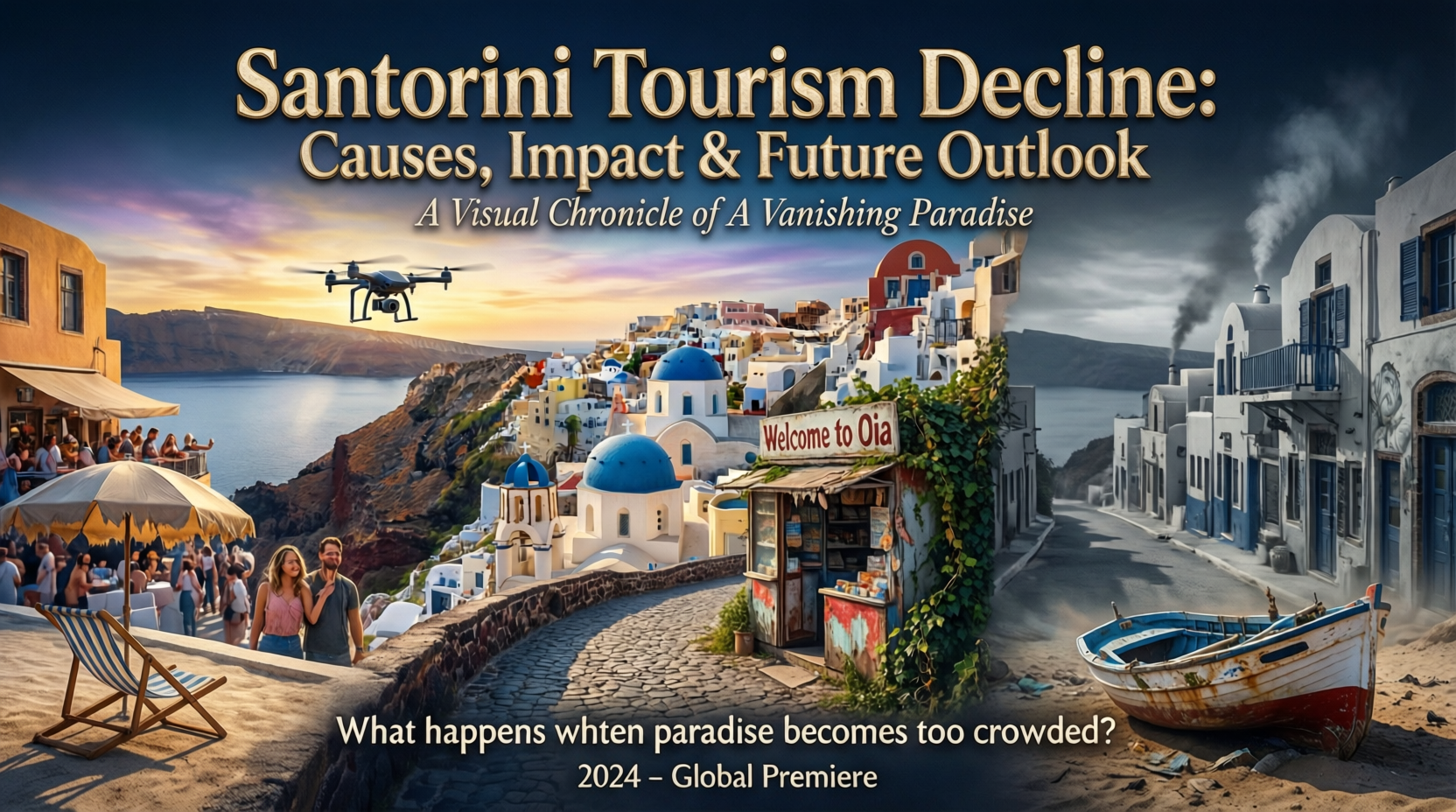
Santorini tourism decline refers to the drop in visitor numbers and tourism revenue on the Greek island of Santorini in 2025, driven by safety fears, market shifts, and economic impacts on local businesses.
| Fact | Detail |
|---|---|
| Location | Santorini, Greece |
| Industry Affected | Tourism Sector |
| 2025 Tourism Change | Significant decline in arrivals and revenue |
| Main Causes | Earthquake concerns, shifting traveller demand |
| Key Impact Areas | Hotels, restaurants, local economy |
Who/What Is Santorini Tourism Decline
Santorini tourism decline is the notable reduction in tourist arrivals and earnings on Santorini, a globally famous Greek island, especially pronounced in 2025 compared with recent years.
Why Santorini Tourism Is Declining
. Seismic Activity and Safety Concerns
Santorini experienced an unusual series of earthquakes and tremors in early 2025. These ranged up to around magnitude 5.0–5.3, triggering emergency responses and widespread media coverage.
This seismic unrest discouraged many travellers from booking visits. Data show a significant fall in airline bookings and tourist reservations linked to seismic fear, with some reports noting drops of over 20 % in bookings year‑on‑year during early 2025.
. Reduced International Arrivals
International tourists are a major source market for Santorini. In 2025, airline arrivals to the island fell by around 19 %, with key markets such as France, the UK, Germany, and others showing lower numbers.
Ferry bookings — especially from long‑haul travellers — also declined, contributing to the overall downturn in visitor numbers.
. Shift in Travel Demand
In addition to safety concerns, there is a broad shift in tourist preferences. Travellers are increasingly exploring less crowded Greek islands such as Crete, Paros, Naxos, or Corfu, reducing pressure on traditional hotspots like Santorini.
Higher travel costs and global economic uncertainty have also played a role in pushing some travellers toward more affordable or emerging destinations.
. Overtourism Aftereffects
Before 2025, Santorini struggled with overtourism — overcrowded streets, high prices, and strained local infrastructure. The cumulative effect has caused diminishing tourist satisfaction, which coupled with recent events, accelerated the decline.
Impact of Tourism Decline on Santorini
. Economic Losses for Hospitality Sector
Santorini’s tourism downturn sharply hit the island’s economy, particularly hotels and restaurants. In the second quarter of 2025 compared with 2024:
- Hotel revenues dropped about 22.1 %,
- Restaurant income fell approximately 21 % — the largest fall among Greek islands.
This decline has created financial strain for many businesses that depend on steady tourist spending.
. Employment and Local Livelihoods
Tourism supports a large portion of Santorini’s workforce — from hotel staff to tour operators and shop owners. With fewer visitors, seasonal and full‑time jobs were reduced, affecting incomes for local families.
Supply chains — including food sourcing, transport services, and artisan producers — also faced reduced demand.
. Reduced Cruise Ship Traffic
Santorini historically welcomed thousands of cruise passengers annually. During 2025, some cruise liners altered itineraries or reduced stops at Santorini due to caution around safety and crowd concerns, further decreasing short‑stay visitor numbers.
. Competitive Pressure from Other Islands
While Santorini suffered, other Greek destinations such as Corfu, Chania (Crete), and Zakynthos posted tourism growth during the same period. This shift reflects changing travel patterns and destination diversification within Greece.
Broader Causes Behind the Downturn
. Changing Traveller Behaviour
Modern travellers often seek authentic, less crowded, and affordable experiences. After years of overtourism, Santorini’s reputation for crowding and high costs may have discouraged repeat and new visitors alike.
. Economic Uncertainty
Rising global costs, inflation, and financial caution have made some tourists shorten stays, spend less, or choose alternative destinations that feel more value-for-money.
. Shift in Marketing and Searches
Data suggest declining search interest in Santorini’s ferry routes and travel keywords compared with emerging destinations, indicating a broader trend in travel planning behaviour.
What This Means for Tourism Stakeholders
Operators and Business Owners
With lower revenues and foot traffic, many tourism operators are:
- offering discounts and deals to attract bookings,
- focusing on direct online sales, and
- diversifying services with experiences like local culinary tours and cultural events.
Destination Management
Authorities are pursuing more sustainable tourism strategies that balance visitor numbers with infrastructure capacity. This includes regulating cruise arrivals and promoting off-peak travel experiences.
Local Community Impacts
Beyond economics, the decline has shifted community life:
- Off-season rental availability and lower prices have eased housing pressures for some locals.
- However, reduced job opportunities remain a concern, especially for seasonal workers.
Future Outlook for Santorini Tourism
Signs of Recovery
Early booking data for 2026 show a jump in direct hotel bookings across Greece, including smaller losses anticipated for Santorini compared with 2025’s downturn.
These trends suggest possible recovery as traveller confidence rebuilds and marketing efforts take effect.
Repositioning the Destination
To strengthen its appeal, Santorini may:
- highlight unique experiences beyond sunsets and luxury stays,
- promote cultural, eco-friendly and adventure tourism,
- expand seasonal events to appeal to year-round visitors.
Sustainability Focus
Long-term tourism health may depend on meeting visitor expectations while protecting local resources and heritage. This includes managing crowds, improving infrastructure, and fostering authentic community engagement.
