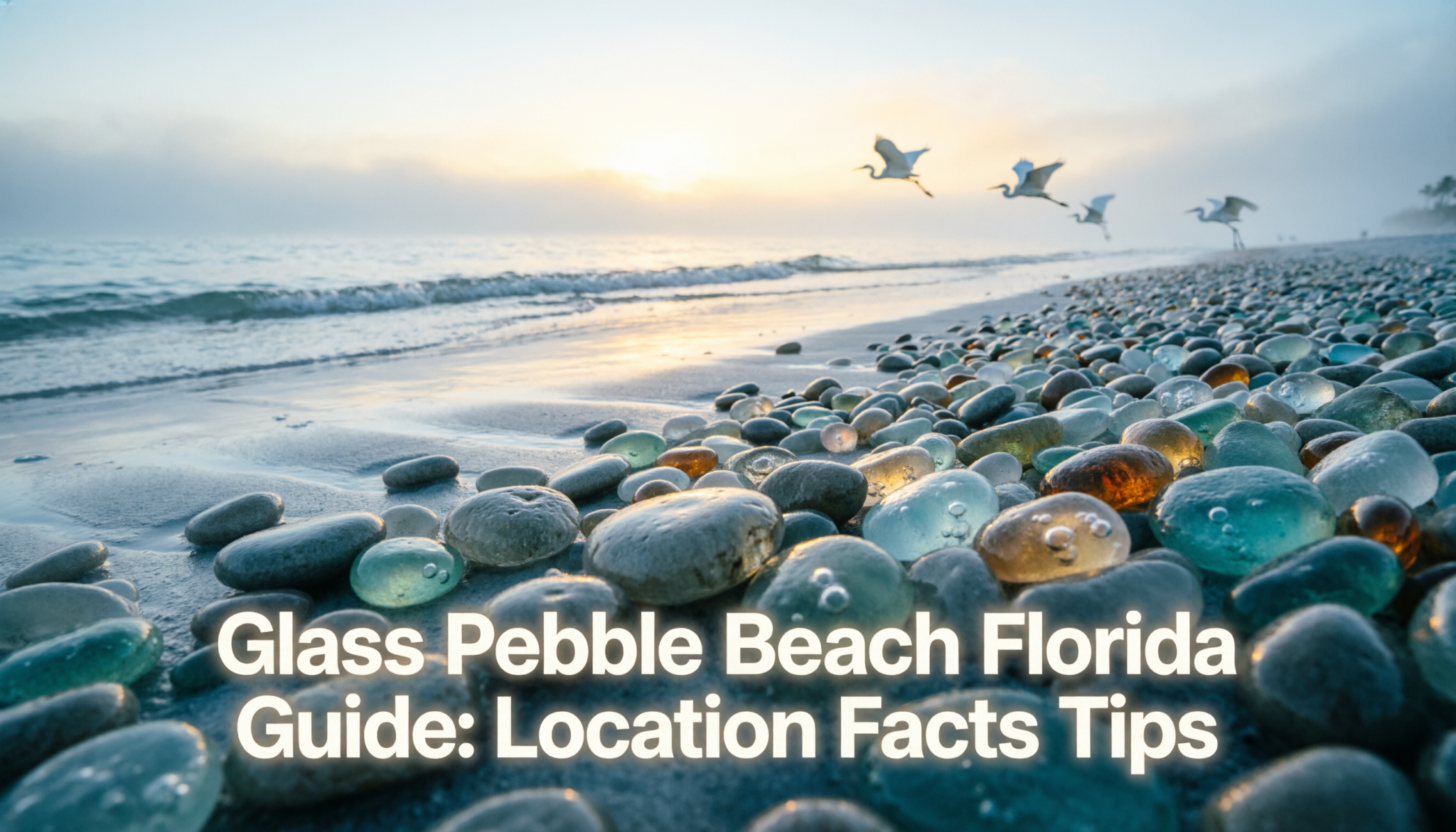
Glass Pebble Beach in Florida refers to coastal spots where smooth, colorful glass-like stones appear naturally over time, creating a rare and eye-catching shoreline experience.
What Is Glass Pebble Beach Florida
Glass pebble beaches are not official named locations in most parts of Florida. Instead, they are natural or semi-natural coastal areas where broken glass pieces have been shaped by waves, sand, and time into smooth, pebble-like forms.
These pebbles look similar to sea glass. Over many years, ocean movement removes sharp edges and creates soft, rounded stones. The result is a beach that sparkles with different colors such as green, brown, white, and sometimes rare shades like blue.
In Florida, such beaches are less common compared to places like California, but small pockets still exist where you can find these unique pebbles.
How Glass Pebbles Form Naturally
Glass pebbles form through a long natural process. This process involves both human activity and ocean movement.
Glass waste enters the ocean from past disposal or ship activity. Waves push glass pieces against sand and rocks. Over time, the edges become smooth and frosted. The pieces shrink and turn into pebble-like shapes.
This process can take 10 to 50 years or more. The longer the glass stays in the ocean, the smoother and more valuable it becomes.
Locations in Florida Where You May Find Glass Pebbles
Florida does not have a single famous “Glass Pebble Beach,” but several coastal areas may have sea glass and glass pebbles.
Fort De Soto Park beaches are known for clean sand and occasional sea glass finds. After storms, you may find small polished pieces.
Venice Beach is famous for shark teeth, but visitors sometimes discover sea glass mixed with shells and fossils.
Some parts of Jacksonville’s coastline can reveal glass pebbles, especially after high tide or rough weather.
Sanibel Island is popular for shell collecting. Along with shells, you may find small sea glass pieces in certain areas.
Pensacola Beach sometimes brings in smooth glass pieces, especially in less crowded spots.
Best Time to Find Glass Pebbles
Timing is very important if you want to find glass pebbles.
The ideal time is early morning before crowds arrive. Conditions after storms or strong waves are also helpful. Low tide increases your chances, and winter months are often better because beaches are less crowded.
After storms, waves dig deeper into the ocean floor and bring hidden materials to shore. This increases your chances of finding rare pieces.
Types of Glass Pebbles You May Discover
Glass pebbles come in different colors and shapes. Some are common, while others are rare and valuable.
Common colors include green, brown, and clear or white. Rare colors include blue, red, purple, and orange.
Rare colors are usually older and come from antique glass items. These pieces are often smaller but more valuable to collectors.
Tips for Finding Glass Pebbles Faster
Finding glass pebbles requires patience and attention.
You should walk slowly and scan the ground carefully. Look near the waterline and check areas with shells and small stones. Visiting less crowded beaches improves your chances. Sunlight helps you spot shiny surfaces more easily.
Wet sand makes glass pebbles easier to see because they reflect light.
Are Glass Pebbles Safe to Collect
In most Florida beaches, collecting small amounts of sea glass or glass pebbles for personal use is allowed. However, rules can vary depending on the location.
You should not take large quantities. It is important to respect protected areas and parks. Avoid digging deeply and always follow local regulations.
Always check beach rules before collecting, especially in state parks.
Environmental Impact and Responsibility
Glass pebbles may look beautiful, but they are still the result of human waste. Today, ocean dumping is illegal and harmful to marine life.
Modern glass pebbles mostly come from old pollution, not current practices.
You should not leave trash on the beach. Avoid adding glass intentionally. Support clean beach initiatives and respect wildlife and habitats.
Protecting beaches ensures future visitors can enjoy these natural treasures.
Difference Between Sea Glass and Glass Pebbles
Many people use these terms interchangeably, but there are slight differences.
Sea glass usually has a frosted and smooth texture, while glass pebbles are smooth with a slightly shinier surface. Sea glass tends to have irregular shapes, while glass pebbles are more rounded. Sea glass has a matte finish, while glass pebbles appear more polished. Sea glass is commonly used for jewelry and crafts, while glass pebbles are often used for decoration and collecting.
Both are formed by ocean action, but glass pebbles often appear more rounded due to longer exposure.
Why Glass Pebble Beaches Are Rare in Florida
Florida’s beaches are mostly made of soft white sand. This type of coastline does not support the formation of large amounts of glass pebbles.
The reasons include gentle waves compared to rocky coasts, a lack of rocky shorelines, strict environmental laws today, and natural sand composition.
In contrast, rocky beaches in other regions create more friction, which helps shape glass faster.
Uses of Glass Pebbles
Glass pebbles are not just for collecting. Many people use them for creative and decorative purposes.
They are used in jewelry making, home decoration, garden design, aquarium decoration, and art projects.
Rare pieces are often sold to collectors or used in handmade crafts.
Travel Tips for Visiting Florida Beaches
If you are planning to explore glass pebble spots, preparation is important.
You should bring comfortable walking shoes or sandals, a small bag or container for collection, sunscreen, water, a hat, and sunglasses.
For safety, avoid sharp objects while searching. Stay aware of tides and do not enter restricted areas.
Planning your visit properly improves your experience and safety.
Photography Tips for Glass Pebbles
Glass pebbles are beautiful and perfect for photography.
You should take photos during sunrise or sunset. Natural light provides better color. Focus on close-up shots and capture wet pebbles for a shiny effect.
Macro photography works best for showing texture and detail.
Frequently Asked Questions
Are glass pebbles natural or man-made
They are originally man-made glass but become naturally shaped by the ocean over time.
Can you find large glass pebbles in Florida
Most pieces in Florida are small due to the sandy coastline.
Is it legal to sell collected glass pebbles
Small-scale selling is usually allowed, but commercial collection may require permission.
Do glass pebbles have value
Common colors have low value, while rare colors can be valuable among collectors.
