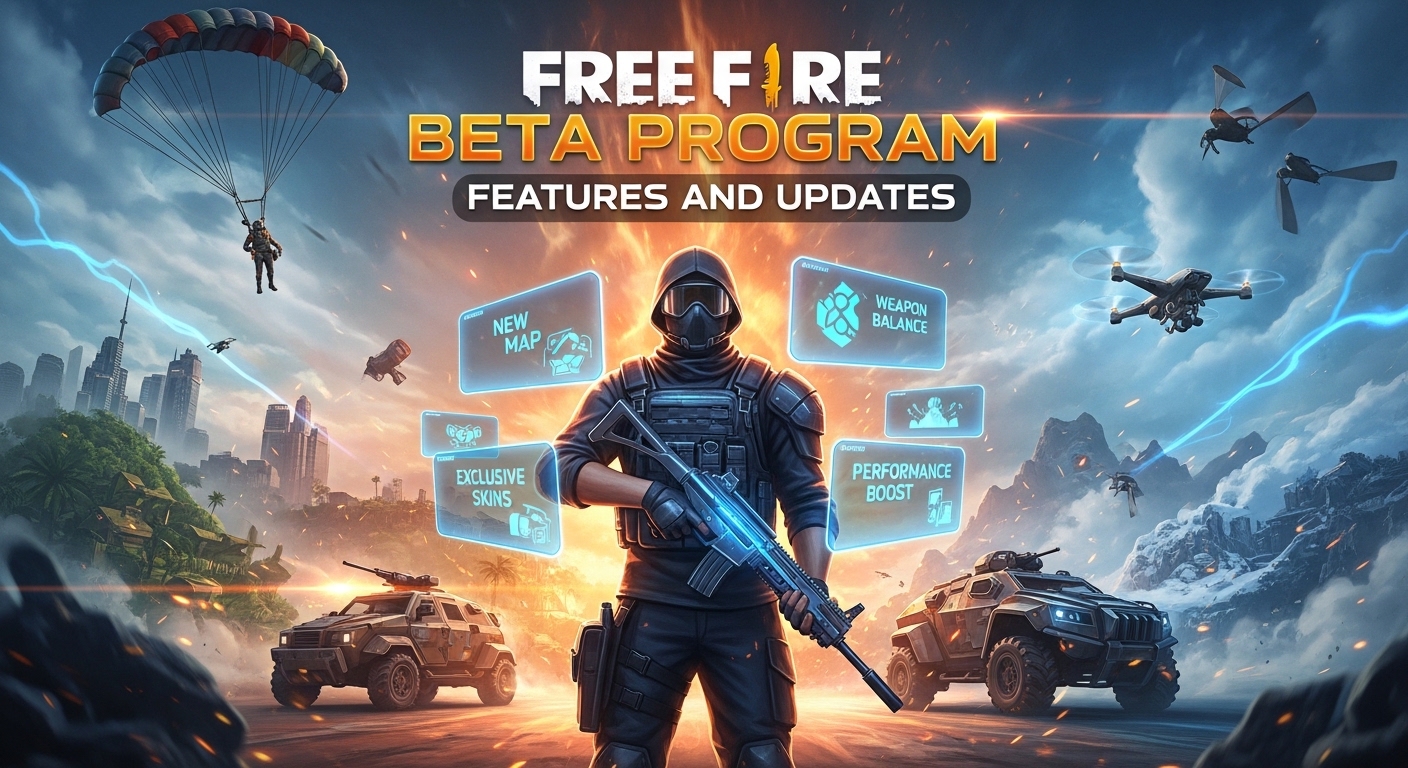
Free Fire beta program is an official testing system that allows selected users to preview new game content before it becomes available worldwide.
The program releases experimental updates, collects performance data, and improves gameplay stability through controlled testing.
Free Fire Beta Program Overview
The Free Fire beta program is a structured testing environment created by Garena to evaluate new features in the mobile game Free Fire. This system operates before public updates are released to all players.
Beta programs are standard in the development of modern video games. They help developers verify gameplay balance, device compatibility, and system performance under real-world conditions.
Testing builds are distributed to a limited number of users to reduce server strain and maintain performance stability. These builds are temporary versions that may change frequently during development.
Structure of the Free Fire Beta Program
The beta program follows a structured release model used across the global gaming industry.
Controlled Testing Phases
Testing occurs in multiple stages to ensure reliability. These stages are based on the software development process used in digital products.
Common phases include:
- Internal testing
- Closed beta testing
- Public testing
- Final release preparation
Each phase focuses on identifying specific technical problems and improving gameplay performance.
Limited Participant Access
The beta program restricts access to selected participants. This system prevents server overload and ensures accurate data collection.
Participants are chosen based on device compatibility, location, and server capacity.
Key Features Tested in the Free Fire Beta Program
The beta program introduces new features that require testing before global release.
Gameplay Balance Adjustments
Gameplay balance ensures fair competition among players. Developers adjust weapon strength, character abilities, and resource distribution.
These adjustments are tested using gameplay statistics collected during matches.
Balance testing is essential in competitive games within the battle royale genre.
New Map Environments
New maps are tested to evaluate player movement and navigation.
Map testing includes:
- Terrain design
- Object placement
- Visibility distance
- Spawn location distribution
Developers analyze movement patterns to ensure balanced gameplay.
Updated Combat Systems
Combat system updates improve responsiveness and accuracy.
These updates may include:
- Improved targeting mechanics
- Faster weapon switching
- Reduced input delay
Combat performance depends on processing speed provided by the device central processing unit.
Technical Updates Released Through the Beta Program
Technical improvements are a core focus of beta testing.
Graphics Optimization
Graphics optimization improves visual quality while maintaining stable performance.
Rendering performance depends on the device graphics hardware. Developers adjust graphical settings to support a wide range of devices.
Testing ensures consistent performance across different screen resolutions.
Frame Rate Stability Improvements
Frame rate stability prevents gameplay lag and improves responsiveness.
Developers monitor performance metrics such as frames per second, memory usage, and processing load.
Stable frame rates improve player experience in fast-paced matches.
Network Performance Enhancements
Network performance improvements reduce connection delays.
Developers test connectivity using advanced network protocol systems.
These improvements help maintain reliable communication between the player device and game servers.
Security Updates in the Free Fire Beta Program
Security testing protects player accounts and system integrity.
Anti-Cheat System Testing
Anti-cheat systems detect unauthorized modifications to the game.
Developers test detection algorithms designed to prevent cheating and maintain fair gameplay.
Security testing helps protect the competitive environment.
Account Protection Features
Account protection includes verification systems that reduce unauthorized access.
These systems use authentication methods similar to those used in information security frameworks.
Secure login processes protect player progress and personal data.
Performance Monitoring in the Beta Program
Performance monitoring is essential for identifying system issues.
Device Compatibility Testing
Developers test the game on multiple device models to ensure compatibility.
Testing includes evaluation of:
- Processor speed
- Memory capacity
- Operating system version
- Screen resolution
Compatibility testing helps ensure consistent gameplay across different devices.
Resource Usage Analysis
Resource usage analysis measures system performance during gameplay.
Developers monitor:
- Battery consumption
- Memory usage
- Storage utilization
- Device temperature
This data helps optimize performance and reduce system strain.
Update Delivery in the Free Fire Beta Program
Updates are delivered frequently during testing cycles.
Incremental Update System
Incremental updates deliver small changes without requiring full reinstallation.
This method reduces download size and installation time.
Update distribution relies on systems used in content delivery network technology.
Scheduled Release Windows
Developers release updates during scheduled testing windows.
Release scheduling ensures stable server performance and predictable testing cycles.
Players receive notifications before updates begin.
User Interface Improvements in the Beta Program
User interface updates improve navigation and usability.
Menu Layout Adjustments
Developers redesign menus to simplify navigation.
These changes improve accessibility and reduce user confusion.
Interface improvements are based on principles used in human–computer interaction research.
Control Customization Features
Control customization allows players to adjust button placement and sensitivity.
Custom controls improve gameplay comfort and responsiveness.
Testing ensures that control adjustments function correctly across different devices.
Audio System Updates in the Beta Program
Audio updates improve sound quality and clarity.
Sound Effect Optimization
Sound effects are tested to ensure accurate timing and volume balance.
Developers evaluate audio synchronization during gameplay.
Sound performance relies on digital processing methods used in digital audio systems.
Voice Communication Testing
Voice communication features allow players to communicate during matches.
Developers test microphone functionality and network latency to ensure clear communication.
Reliable communication improves teamwork in multiplayer matches.
Bug Detection and Resolution in the Beta Program
Bug detection is a primary objective of beta testing.
Types of Bugs Identified
Common issues detected during testing include:
- Application crashes
- Visual glitches
- Sound errors
- Login failures
- Server disconnections
Developers track these issues using structured systems similar to issue tracking software.
Bug Fix Deployment
Bug fixes are released through regular updates.
Developers verify fixes before applying them to the main version of the game.
This process ensures stable gameplay for all users.
Server Infrastructure Used in the Beta Program
Server infrastructure supports large-scale multiplayer testing.
Dedicated Server Architecture
Dedicated servers manage player connections and game data.
A dedicated server operates independently from player devices, ensuring consistent performance.
Server management relies on technologies used in data center operations.
Load Balancing Systems
Load balancing distributes network traffic across multiple servers.
This system prevents performance slowdowns during high player activity.
Load balancing improves server reliability and reduces connection interruptions.
Data Analytics in the Free Fire Beta Program
Data analytics helps developers understand player behavior.
Gameplay Data Collection
Developers collect anonymous gameplay statistics such as:
- Match duration
- Player movement patterns
- Weapon usage frequency
- Network latency
This data is analyzed using techniques related to data analysis.
Performance Trend Monitoring
Performance trend monitoring identifies recurring technical problems.
Developers use collected data to improve system efficiency and gameplay stability.
Regional Testing in the Free Fire Beta Program
Regional testing ensures consistent performance across global markets.
Server Distribution by Region
Developers deploy servers in different geographic regions.
This approach reduces latency and improves connection stability.
Regional server placement is influenced by infrastructure used in the telecommunications industry.
Localization Testing
Localization testing ensures accurate language translation and interface clarity.
Developers verify text formatting and menu alignment in multiple languages.
Localization testing improves accessibility for players worldwide.
Maintenance Operations in the Beta Program
Maintenance operations are necessary to update systems and fix technical issues.
Scheduled System Maintenance
Maintenance activities include:
- Server updates
- Security patch installation
- Database optimization
- Performance improvements
Maintenance ensures stable gameplay during testing.
Temporary Service Interruptions
Players may experience temporary service interruptions during maintenance.
These interruptions allow developers to deploy system updates safely.
Player Feedback Role in the Beta Program
Player feedback is essential for improving game quality.
Feedback Submission Channels
Developers provide official communication channels for reporting issues.
These channels include:
- In-game feedback forms
- Customer support systems
- Official community forums
Feedback helps developers identify technical problems quickly.
Importance of Accurate Reporting
Accurate feedback allows developers to reproduce issues and fix them efficiently.
Detailed reports improve the overall quality of future updates.
Version Management in the Free Fire Beta Program
Version management ensures consistent tracking of updates.
Build Identification System
Each beta release includes a unique build number.
Build numbers help developers monitor changes and track performance.
Version tracking relies on structured methods used in software configuration management.
Release Scheduling Strategy
Developers follow a planned schedule for releasing new builds.
This schedule ensures predictable testing cycles and stable system performance.
Storage and Data Management in the Beta Program
Data management is critical for maintaining system reliability.
Database Performance Optimization
Developers optimize database systems to improve response time.
Database optimization ensures quick access to player data.
Modern game databases operate using technologies similar to database management system platforms.
Backup and Recovery Systems
Backup systems protect game data from loss.
Recovery systems restore data in case of system failure.
These systems ensure continuous service availability.
Compliance and Safety Standards in the Beta Program
Compliance standards ensure safe and reliable software operation.
Privacy and Data Protection
Developers follow strict privacy regulations to protect user information.
Data protection policies align with global standards used in data privacy practices.
Secure data handling prevents unauthorized access.
Responsible Testing Guidelines
Responsible testing requires users to follow official instructions and avoid unauthorized modifications.
Following guidelines ensures stable gameplay and protects system integrity.
