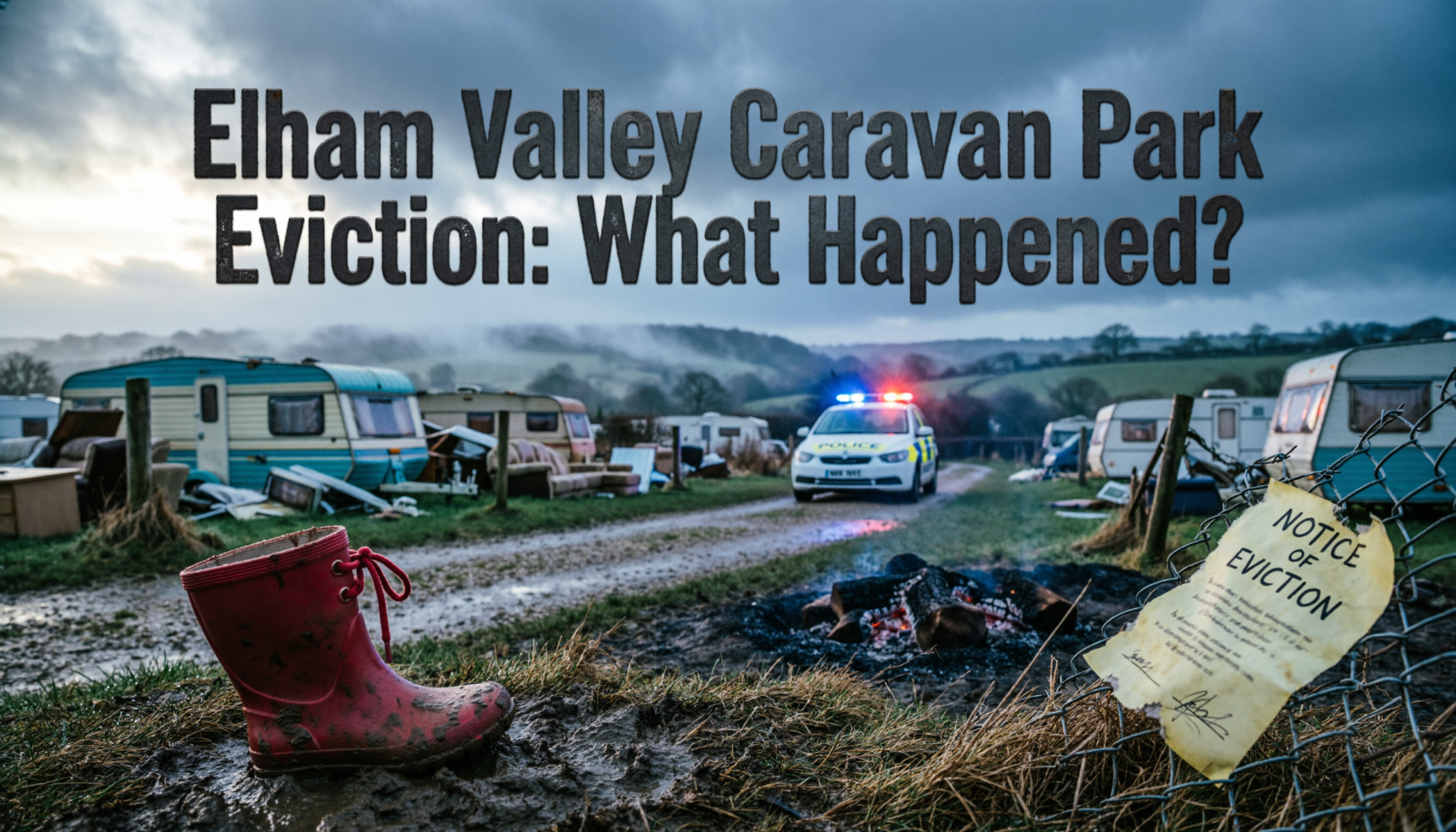
Elham Valley Caravan Park eviction refers to a situation where residents living on the caravan site were given notices telling them to leave, after the caravan park’s licence was revoked and the site went into financial trouble.
What Is Elham Valley Caravan Park?
Elham Valley Holiday Park, also known locally as Goldpark Caravan Park or Goldpark Leisure, is a caravan site near Wingmore in Kent, between Folkestone and Canterbury in England. The park has static caravans that some people have lived in for many years. This site is not a typical holiday campsite; many households treated their caravans as long-term homes.
How Long Residents Lived There
Many of the people living on the site were not short-term visitors. Some residents had been there for up to a decade or more, using their caravan as their main or only home. They maintained the caravans and lived much like regular residents of a neighbourhood.
Why Eviction Notices Were Issued
In 2025, eviction notices were posted on the caravans telling residents they had to leave within about 14 days. These notices shocked many people because they had not expected to be asked to vacate suddenly.
The key reasons behind the eviction notices were licence revocation and the site going into receivership.
Licence Revocation
Local authorities require caravan sites to have a valid site licence to operate legally. This licence ensures that safety rules, fire precautions, sanitation, and other standards are met. In this case, the site’s licence was revoked by the licensing authority. Once the licence was revoked, the site no longer met the legal requirements to operate as a caravan park. Residents were then regarded as occupying the land without legal permission.
Receivership and Financial Situation
Around the same time, the company running Goldpark Leisure faced financial issues. The site went into receivership, and the receivers began the process of preparing the land for sale or redevelopment. Because the owner no longer controlled the site and the licence was gone, the receivers determined residents did not have legal rights to remain.
The Eviction Notices
The eviction notices were reportedly attached to caravan doors telling occupants they must leave within about 14 days. For many residents, this was far too little time to find alternative housing, especially when they had lived there for so long and did not have other homes lined up.
Residents’ Reaction and Concerns
Residents described themselves as shocked and terrified after seeing eviction notices. Because many had lived on the park for years, they felt the eviction was abrupt and unfair. Some faced the risk of homelessness if they could not secure alternative housing quickly.
The situation also caused broader concern among local residents and community supporters, who raised questions about what would happen to families suddenly without stable homes.
Role of Local Authorities
After the eviction notices were issued, local authorities such as the parish council and licensing officers became involved. The park was in receivership, the caravan licence had been revoked, and occupants were told to leave. The council noted that many of the caravans had not been moved for years and that residents did not have vehicles to tow them away. The council said it would monitor the situation and offer housing support where possible.
The licensing authority revokes licences when sites do not meet required safety or management standards. Without a licence, a site cannot legally host caravans.
Legal and Safety Background
Under UK law, caravan sites must hold a valid site licence under the Caravan Sites and Control of Development Act. Licences ensure compliance with safety regulations including fire precautions, sanitation, and building standards. If a licence is revoked, the site can no longer operate legally for habitation.
Why This Happened Now
There is no single clear public record that explains exactly why the licence was removed, but sites typically lose licences for one or more of the following reasons: failure to meet safety and health standards, failure to maintain facilities such as water, waste, and fire safety, lack of proper management or unresolved complaints, or financial difficulties of the site owner.
Once the licence was revoked and the site went into receivership, the legal basis for residents to stay disappeared. This is why eviction notices were issued so suddenly in 2025.
Eviction Notice Timing and Impact
Many residents expressed that the timeframe given of around two weeks to vacate was insufficient. For people without second homes or savings, securing a new place within that short period is extremely difficult. The fear of homelessness was a major concern. Residents did not have vehicles to tow caravans away, and some caravans could not be moved easily due to age, condition, or lack of proper road access.
Community Response
Local groups began to raise awareness and campaign for better treatment of the residents. There were reports highlighting the emotional distress faced by families and older residents. Bringing attention to these issues helped generate public sympathy and urged local authorities to at least provide housing advice and temporary support.
What Happens Next
With the site licence revoked and the land in the hands of receivers, the future of the Elham Valley Caravan Park land remains uncertain. Possible outcomes include sale of the land to a new owner, redevelopment for other uses, or applying for a new licence if standards can be met.
However, redevelopment or a new licence will take time. In the meantime, former residents must find alternative housing, and local authorities are trying to help them access housing advice, temporary accommodation options, and support services.
Rights for Caravan Residents
Residents of caravan parks in the UK have some legal rights if they have a formal agreement with the site owner. But when a site loses its licence or enters receivership, the legal footing changes. Residents may no longer have protected tenancy rights, especially if the park’s operating licence is removed by the authority.
In some situations, caravan residents may be entitled to longer notice periods under UK law, depending on the exact agreement and legal status of the caravan site. In this case, the licence revocation appears to have overridden those protections.
