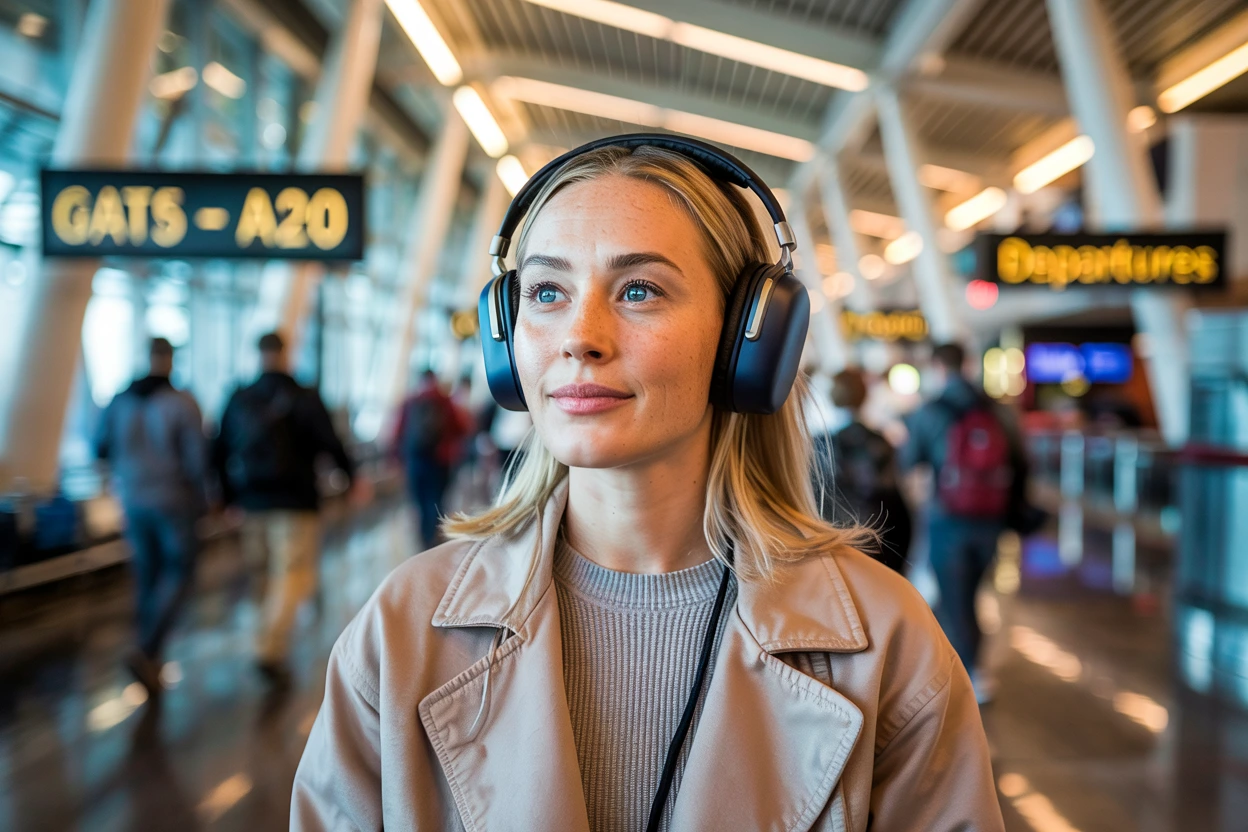
Flying can be noisy. The constant engine sound, crying babies, and passenger chatter can make it hard to enjoy your journey.
Noise cancelling headphones help you block out those sounds, so you can relax, sleep, or enjoy your music or movies in peace.
But not all headphones work well on planes. In this guide, you will learn about the best noise cancelling headphones for flights. We will focus on sound quality, comfort, battery life, and noise cancellation strength.
What Makes a Headphone Good for Flights?
When flying, you need headphones that cancel noise well. Regular headphones can’t block the deep engine noise. Good flight headphones should have active noise cancelling (ANC) technology.
This feature uses tiny microphones to listen to the outside noise and then creates opposite sound waves to cancel it.
You also need comfort because flights are long. Over-ear headphones are usually more comfortable than earbuds for longer use.
A good battery is also important because flights can be 10 hours or more. Wireless headphones with strong battery life help you avoid dealing with wires and changing batteries often.
Top Brands for Noise Cancelling Headphones
Some headphone brands are trusted by travelers around the world. These brands are known for offering excellent noise cancelling performance, great sound, and comfort. Below are some of the top names:
- Sony
- Bose
- Sennheiser
- Apple
- Bowers & Wilkins
These brands have a long track record. They are known for innovation, comfort, and clear sound. Many business travelers and frequent flyers prefer them because of their quality.
Sony WH-1000XM5
Sony WH-1000XM5 is one of the best noise cancelling headphones for flights. It offers strong ANC that removes engine and cabin noise. Many users say the sound quality is excellent, with clear highs and deep bass.
The battery life is also impressive. You can get up to 30 hours of playtime on a full charge. This makes it a good choice for long international flights. The headphones are also light and have soft ear cushions, so they stay comfortable for hours.
It also supports quick charging. A 10-minute charge gives you around 5 hours of playtime. This is helpful if you forget to charge them before a flight.
Bose QuietComfort 45
Bose is a well-known name when it comes to flight headphones. The QuietComfort 45 model has smooth noise cancelling that works well in planes. The headphones use both passive and active noise cancelling to reduce sound from all directions.
They are very comfortable due to their soft padding and lightweight design. You can wear them for long periods without feeling pressure on your head or ears. The battery life is around 24 hours, which is enough for most long trips.
One more useful feature is the “aware mode.” This allows you to hear your surroundings when needed, such as announcements at the airport, without taking off your headphones.
Apple AirPods Max
Apple’s AirPods Max is another premium option. Though more expensive than other models, it provides high-quality sound and top-level noise cancelling. Travelers using Apple devices often prefer these headphones because of smooth syncing and good controls.
The build quality is solid, and the memory foam ear cups make them suitable for long use. The battery life is around 20 hours with ANC on. While it is slightly lower than others, it still covers most flight durations.
These headphones also support spatial audio, which gives a cinema-like sound when watching movies on an iPad or iPhone. Many flyers enjoy this feature while traveling.
Sennheiser Momentum 4 Wireless
Sennheiser is trusted for its clear sound and audio balance. The Momentum 4 Wireless headphones come with powerful ANC, which helps in reducing engine and cabin noise. They also have a clean and modern design.
What makes them stand out is the battery life. You can get up to 60 hours on one charge, which is far more than most other headphones. This makes them great for people who travel often or go on long flights.
The headphones are also very comfortable. The ear cups are soft and the headband is padded. Even after wearing them for 5 to 6 hours, you won’t feel much discomfort.
Bowers & Wilkins PX7 S2
Bowers & Wilkins PX7 S2 is another good option for flying. These headphones are strong in design and sound performance. The ANC is advanced and handles different kinds of noise, including plane engines.
They are made with memory foam and high-quality materials, which gives a premium feel. The battery life is about 30 hours. A 15-minute quick charge gives around 7 hours of use, which is helpful during busy travel schedules.
Travelers who like clear and detailed sound will enjoy these. They are also known for good Bluetooth connection and easy-to-use buttons.
Things to Consider Before Buying
When choosing noise cancelling headphones for flights, you should check a few important features:
- Noise Cancelling Quality: Make sure the ANC is strong enough to handle engine noise.
- Comfort: Soft ear cups and adjustable headbands make long flights easier.
- Battery Life: Look for at least 20 hours of battery life with ANC on.
- Portability: Foldable headphones or those with a travel case are easier to carry.
- Compatibility: Check if they work well with your phone, tablet, or laptop.
These points help you pick the right model for your travel needs. You don’t want to buy headphones that feel heavy or run out of battery in the middle of your journey.
Why Noise Cancelling is Important on Planes
Airplane cabins are full of background sounds. Engine humming, air vents, and other passengers can create a noisy space. Noise cancelling headphones help remove those distractions. This lets you enjoy your favorite music, movies, or even just silence.
Some travelers also use them to sleep better. By blocking out noise, it becomes easier to rest during a long flight. Even if you are not listening to anything, wearing noise cancelling headphones can help calm your mind.
Also, noise cancelling reduces the need to turn up the volume, which can protect your hearing over time.
