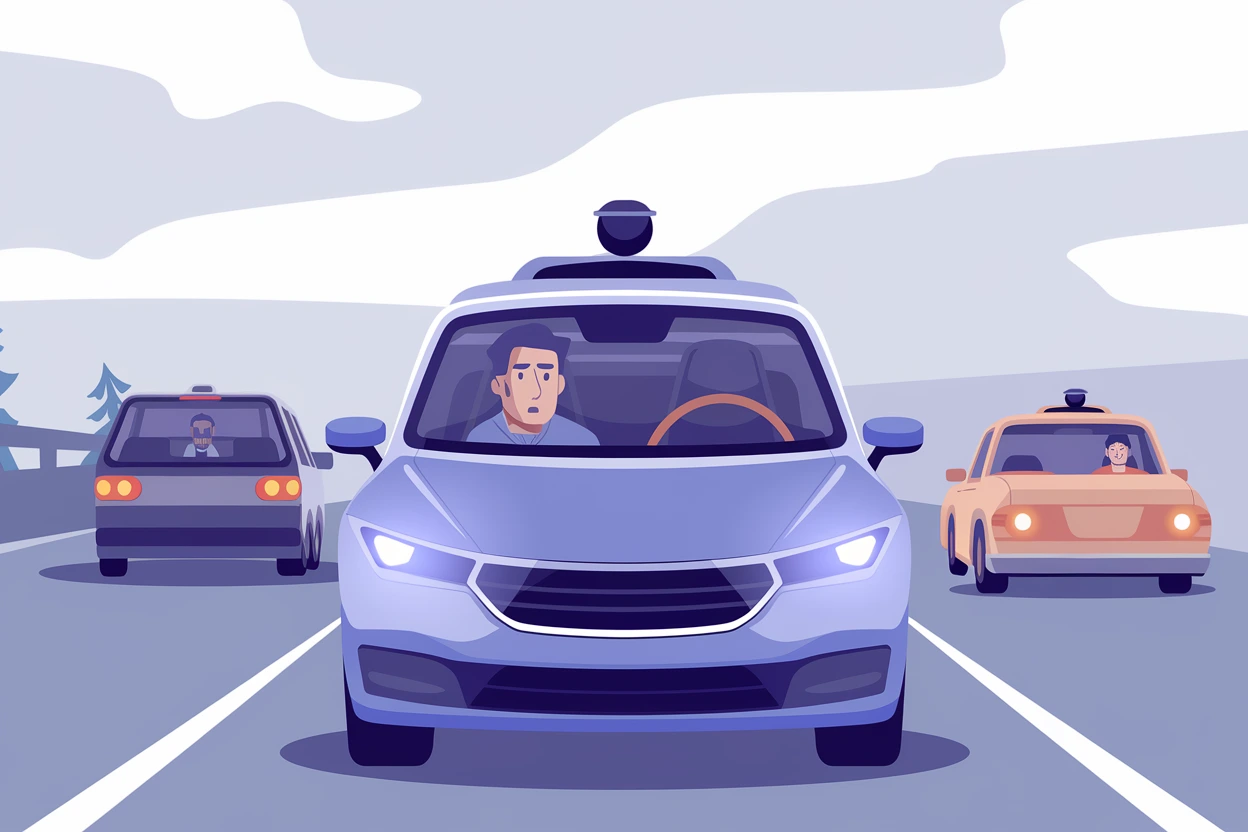
Self-driving cars were once a thing of science fiction. Today, they are becoming a reality.
Companies like Tesla, Waymo, and General Motors are working hard to make autonomous cars safe and reliable.
These vehicles use advanced technology like AI, cameras, and sensors to drive without human control. Many people wonder if human drivers will no longer be needed in the future.
This article explores how close we are to a world where self-driving cars take over.
How Self-Driving Cars Work
Self-driving cars use several technologies to operate safely:
- Artificial Intelligence (AI): AI processes data from cameras, sensors, and GPS to make driving decisions. However, some experts worry about the risks AI poses in decision-making, as discussed in The Dark Side of AI Chatbots: Humans or Machines?.
- Lidar and Radar Sensors: These sensors detect objects, other vehicles, and pedestrians.
- Cameras: They help the car see road signs, traffic lights, and lane markings.
- GPS and Maps: The car uses GPS and digital maps to plan its route.
All these technologies work together to help the car drive safely without human help.
The Different Levels of Self-Driving Cars
The Society of Automotive Engineers (SAE) has defined six levels of automation:
- Level 0: No automation. The driver has full control.
- Level 1: Some assistance, like cruise control.
- Level 2: The car can steer and accelerate, but the driver must stay alert.
- Level 3: The car can drive itself in certain conditions, but the driver must take control when needed.
- Level 4: The car can drive itself in most situations without human input.
- Level 5: Full automation. No human driver is needed at all.
Right now, most cars on the road are at Level 2 or Level 3. Companies are working to reach Level 4 and Level 5.
The Benefits of Self-Driving Cars
Self-driving cars could change transportation in many ways:
- Fewer Accidents: Most car crashes happen because of human error. Self-driving cars follow rules and react faster, reducing accidents.
- Less Traffic: Smart cars can communicate with each other and avoid traffic jams.
- More Convenience: People can relax, work, or sleep during trips instead of driving.
- Better Mobility for Everyone: Elderly people, disabled individuals, and those without licenses can travel more easily.
- Lower Costs: Self-driving taxis and trucks could reduce transportation costs.
The Challenges of Self-Driving Cars
While self-driving cars offer many benefits, there are also big challenges:
- Safety Concerns: Accidents involving self-driving cars raise concerns about reliability.
- Legal Issues: Governments need clear rules for who is responsible if a self-driving car crashes.
- High Costs: The technology is expensive, making self-driving cars costly.
- Job Losses: Many drivers, like taxi and truck drivers, may lose their jobs.
- Hacking Risks: Cybercriminals might hack self-driving cars, causing accidents or traffic problems. Similar concerns exist in other areas of technology, such as the security of brain-computer interfaces, as explored in Can Brain-Computer Interfaces Replace Smartphones?.
Companies Leading the Self-Driving Revolution
Many big companies are leading the race to develop self-driving cars:
- Tesla: Offers self-driving features through its “Autopilot” and “Full Self-Driving” (FSD) software.
- Waymo: A company owned by Google, running self-driving taxis in some cities.
- General Motors (GM): Testing self-driving taxis under its “Cruise” brand.
- Uber and Lyft: Working on autonomous ride-sharing services.
- Apple: Secretly developing its own self-driving car project.
When Will Human Drivers Become Obsolete?
No one knows exactly when self-driving cars will fully replace human drivers. Experts believe that it will take many years before Level 5 cars become common. Governments, car makers, and the public must work together to ensure safety, create laws, and build trust in self-driving technology.
For now, human drivers are still needed. But as technology improves, we may one day see a world where driving is completely done by machines.
