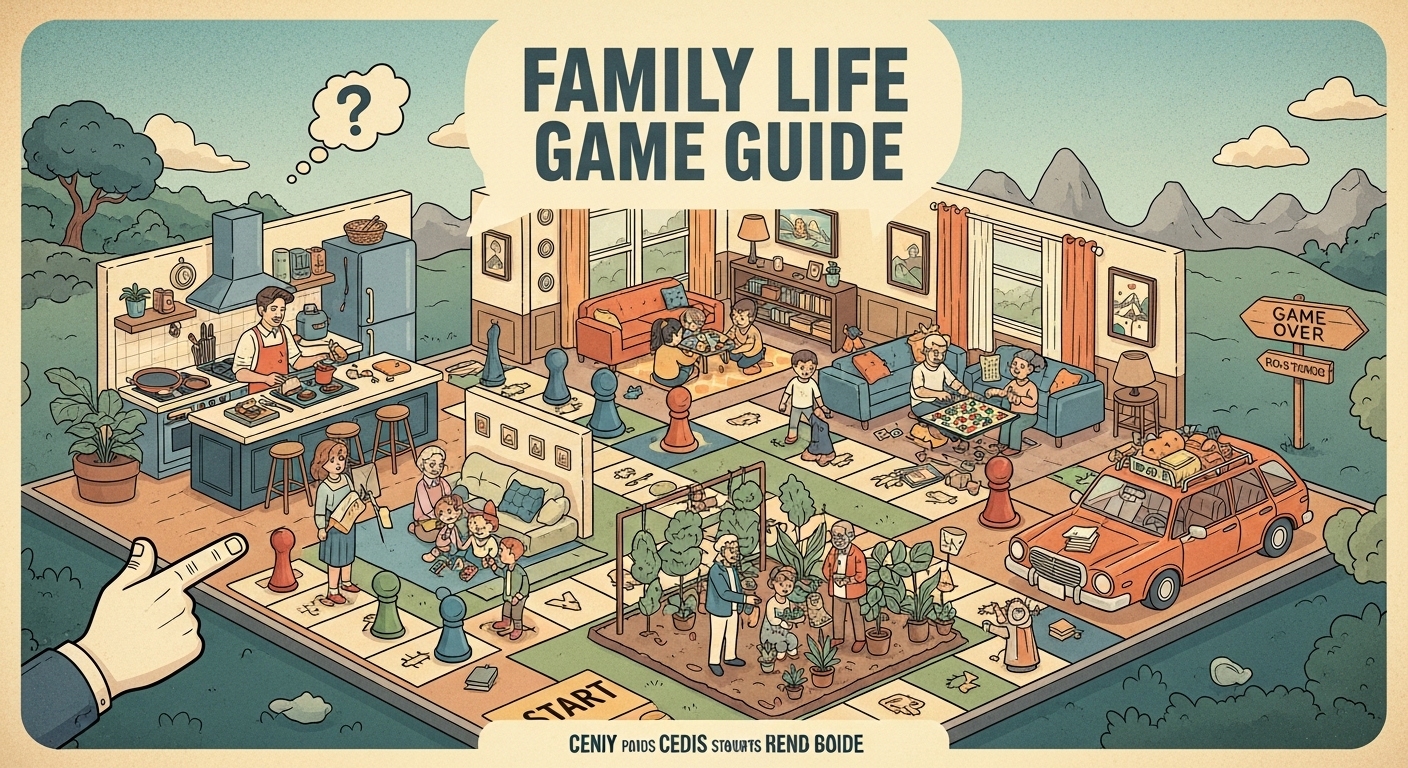
Family Life Game is a structured activity that teaches players how daily choices about money, work, and relationships affect long-term results.
This guide explains rules, gameplay, skills, and practical uses of the Family Life Game in simple and clear language.
What Is the Family Life Game
The Family Life Game is a simulation game that shows how people move through stages of life such as education, employment, marriage, parenting, and retirement. Players make decisions that influence their financial condition and family situation. The game reflects real-life responsibilities in a simplified and controlled environment.
This type of game belongs to the category of life simulation games. These games model everyday situations so players can understand cause-and-effect relationships. They are commonly used in homes, schools, and training programs because they combine entertainment with learning.
The main focus of the Family Life Game is decision-making. Players must choose between different options, such as continuing education or starting a job. Each choice leads to different results. Over time, players see how small decisions create long-term consequences.
Purpose of the Family Life Game
The purpose of the Family Life Game is to help people understand how life decisions influence success, stability, and well-being. The game demonstrates the importance of planning, saving, and responsible behavior.
Key purposes include:
- Teaching financial responsibility
- Explaining life stages
- Building planning skills
- Encouraging cooperation
- Developing problem-solving abilities
- Improving communication within families
The game provides a safe environment where players can learn from mistakes without real financial risk.
Core Objective of the Game
The core objective is to achieve the best possible outcome by managing resources wisely and making balanced decisions. Players usually aim to reach retirement with the highest total value of money, property, and savings.
Success in the game depends on:
- Consistent income
- Controlled spending
- Smart investments
- Careful planning
- Adaptability to unexpected events
The game rewards long-term thinking rather than short-term gains.
Basic Components of the Family Life Game
Every Family Life Game includes several standard components. These components create structure and allow players to track progress.
Game Board
The board represents a path that players follow from the beginning of life to retirement. Each space on the board contains instructions or events. The path usually includes major milestones such as graduation, job selection, marriage, and home ownership.
The board design ensures that players move step by step through different stages of life.
Player Pieces
Each player selects a piece to represent themselves on the board. The piece moves forward according to the number generated by a spinner or dice.
Player pieces help identify each participant and track movement across the board.
Money or Currency
Game money is used to simulate real financial transactions. Players receive income, pay expenses, and manage savings throughout the game.
Handling money in the game teaches budgeting and financial awareness.
Spinner or Dice
A spinner or dice determines movement. This element introduces randomness and keeps gameplay unpredictable.
Random movement ensures fairness and adds excitement to each turn.
Cards
Cards introduce events that affect players. These events may involve financial rewards or penalties.
Common card instructions include:
- Pay medical bills
- Receive bonus income
- Repair property
- Change career
- Add family members
Cards simulate real-life surprises and responsibilities.
Number of Players and Recommended Age
Most versions of the Family Life Game support small groups. The game is suitable for families, classrooms, and social gatherings.
Typical player range:
- Minimum players: 2
- Maximum players: 6
Recommended age:
- Children: 8 years and older
- Teenagers: All levels
- Adults: Suitable for family participation
Younger children can play simplified versions with fewer rules and smaller numbers.
Game Setup Instructions
Proper setup ensures smooth gameplay and prevents confusion. The process is straightforward and takes only a few minutes.
Steps to set up the game:
- Place the board on a flat surface
- Give each player a piece
- Distribute starting money
- Shuffle cards thoroughly
- Decide the order of turns
- Place additional materials within reach
Following these steps ensures fairness from the beginning.
Turn Structure in the Family Life Game
Each player follows a consistent sequence during their turn. This structure keeps gameplay organized and predictable.
Typical turn sequence:
- Spin the wheel or roll dice
- Move the piece forward
- Read the instruction on the space
- Perform the required action
- Adjust money or assets
- End the turn
Players continue taking turns until they reach the retirement space.
Major Life Stages Represented in the Game
The Family Life Game models the main stages of human life. Each stage includes decisions that influence future progress.
Education Stage
Players choose whether to pursue higher education or start working immediately. Education often requires paying fees but leads to higher income later.
This stage teaches the relationship between education and earning potential.
Career Stage
Players select a profession and receive a salary. Different careers offer different income levels and benefits.
Career decisions influence long-term financial stability.
Marriage Stage
Some spaces allow players to get married. Marriage may increase financial responsibilities but can also provide additional income.
This stage introduces the concept of shared responsibilities.
Parenting Stage
Players may add children to their family. Raising children increases expenses but also reflects family growth.
This stage highlights the importance of budgeting and planning.
Home Ownership Stage
Players can purchase houses or property. Owning property increases asset value but requires maintenance costs.
Property ownership demonstrates long-term investment principles.
Retirement Stage
Retirement marks the end of the game. Players stop earning income and calculate their final financial position.
The retirement stage emphasizes saving and long-term planning.
Financial Activities in the Family Life Game
Financial management is central to gameplay. Players must balance income and expenses to achieve success.
Earning Income
Income is received from employment or business activities. Regular income allows players to pay bills and invest in assets.
Consistent income supports financial stability.
Paying Expenses
Expenses include taxes, housing costs, education fees, and daily living expenses.
Managing expenses teaches discipline and responsibility.
Saving Money
Saving money provides security during emergencies. Players who save regularly are better prepared for unexpected costs.
Savings create financial stability.
Investing in Property
Property investment increases asset value over time. However, property ownership may require maintenance and repair costs.
Investment decisions require careful planning.
Managing Debt
Some situations require borrowing money. Loans must be repaid, often with additional charges.
Managing debt teaches accountability and risk awareness.
Skills Developed Through the Family Life Game
The Family Life Game helps players build essential life skills. These skills are useful in both personal and professional situations.
Decision-Making Skills
Players evaluate options and select the most beneficial choice. Decision-making improves with practice.
Financial Awareness
Handling money during the game builds understanding of budgeting, saving, and spending.
Financial awareness supports responsible behavior.
Planning Skills
Players must think ahead to prepare for future expenses. Planning reduces financial risk.
Communication Skills
Playing with others encourages discussion and cooperation.
Problem-Solving Skills
Unexpected events require quick thinking and creative solutions.
Educational Benefits of the Family Life Game
Educators use the Family Life Game as a teaching tool. The game combines learning with interactive participation.
Educational benefits include:
- Understanding real-life responsibilities
- Practicing math calculations
- Learning financial management
- Developing teamwork
- Improving attention and focus
The game supports active learning because players participate directly in decision-making.
Variations of the Family Life Game
Different versions exist to meet the needs of different players. Each version offers unique features.
Classic Board Version
The classic version uses a physical board, pieces, and cards. It is commonly played during family gatherings and classroom activities.
This version focuses on traditional gameplay.
Digital Version
Digital versions run on computers, tablets, or smartphones. These versions include animations and automatic calculations.
Digital gameplay reduces setup time and allows remote participation.
Educational Version
Educational versions are designed for schools and training programs. These versions emphasize financial planning and responsibility.
They are often used in classrooms to teach life skills.
Simplified Version for Young Children
Simplified versions use fewer rules and smaller numbers. These versions are easier for younger children to understand.
They focus on basic learning and enjoyment.
Rules for Winning the Game
Winning depends on achieving the best final score. The score usually combines money, property value, and savings.
Common winning criteria include:
- Highest total wealth
- Most valuable property
- Largest savings balance
- Best financial stability
Players who manage resources carefully are more likely to win.
Game Duration
Game duration depends on the number of players and rule complexity.
Typical game lengths:
- Short game: 30 minutes
- Standard game: 45 to 60 minutes
- Extended game: Up to 90 minutes
Adjusting rules can shorten or lengthen gameplay.
Fair Play and Safety Guidelines
Fair play ensures a positive experience for everyone. Following rules and respecting other players maintains order.
Basic guidelines include:
- Follow official rules
- Take turns honestly
- Handle materials carefully
- Respect other players
- Avoid distractions
These practices promote cooperation and enjoyment.
Common Mistakes Players Make
Understanding mistakes helps players improve performance.
Overspending Early
Spending too much money at the beginning leaves fewer resources later.
Ignoring Savings
Players who do not save money may struggle during emergencies.
Taking Too Many Loans
Borrowing too often creates financial pressure.
Skipping Opportunities
Ignoring education or career opportunities reduces earning potential.
Recognizing these mistakes helps players make better decisions.
Practical Strategies for Better Gameplay
Simple strategies improve success without increasing complexity.
Plan Future Expenses
Think ahead before making purchases. Planning prevents financial shortages.
Maintain Emergency Funds
Keep extra money available for unexpected situations.
Balance Risk and Reward
Choose opportunities carefully. High rewards often involve higher risk.
Track Financial Progress
Monitor income, expenses, and savings regularly.
Consistent tracking improves financial control.
Using the Family Life Game at Home
Families use the game to spend quality time together while learning practical skills.
Benefits of home use include:
- Strengthening relationships
- Teaching responsibility
- Encouraging teamwork
- Improving communication
Regular gameplay creates shared experiences and learning opportunities.
Using the Family Life Game in Schools
Schools use the game as an educational resource. Teachers integrate the game into lessons about finance and life planning.
Classroom applications include:
Financial Education Lessons
Students learn budgeting and saving through interactive practice.
Career Exploration Activities
Students explore different professions and income levels.
Group Learning Exercises
Students work together to solve problems and share ideas.
The game supports active participation in learning.
Creating a Homemade Family Life Game
Families and educators can create a custom version using simple materials. Homemade versions allow customization based on local needs.
Materials required:
- Cardboard or poster board
- Markers or pens
- Small objects as pieces
- Dice or spinner
- Paper money
- Index cards
Steps to create the game:
- Draw a path representing life stages
- Write instructions on spaces
- Create event cards
- Assign starting money
- Define rules clearly
Homemade games encourage creativity and flexibility.
Adapting the Game for Cultural and Community Needs
Different communities adjust the game to reflect local conditions. Adaptation ensures relevance and understanding.
Common adaptations include:
- Local currency values
- Regional job types
- Cultural traditions
- Education systems
- Housing costs
These adjustments make the game more meaningful for participants.
Technology and Modern Family Life Games
Technology has transformed how people play life simulation games. Modern versions offer advanced features that improve convenience and engagement.
Mobile Applications
Mobile versions allow players to access the game anywhere. These versions require minimal setup.
Online Multiplayer Options
Players can connect with others through the internet. Online gameplay allows participation across different locations.
Automated Calculations
Digital systems automatically calculate income, expenses, and savings.
Automation reduces errors and saves time.
Interactive Graphics
Modern games include visual effects that improve user experience.
Graphics make gameplay more engaging.
Accessibility in the Family Life Game
Accessibility ensures that everyone can participate regardless of ability or age.
Common accessibility features include:
- Large text
- Clear instructions
- Simple symbols
- Audio guidance
- High-contrast colors
Accessible design improves participation for all players.
Maintenance and Storage of Game Materials
Proper care extends the lifespan of game components.
Maintenance tips include:
- Store pieces in labeled containers
- Keep cards dry and flat
- Clean the board regularly
- Replace damaged items promptly
Organized storage prevents loss and damage.
Future Development of Family Life Games
Game developers continue improving life simulation games. New features focus on realism, education, and convenience.
Expected developments include:
Virtual Reality Experiences
Virtual environments allow players to experience realistic life scenarios.
Artificial Intelligence Systems
Intelligent systems adjust difficulty based on player performance.
Personalized Gameplay
Players can customize rules, settings, and challenges.
Educational Data Tracking
Game data can help teachers measure learning progress and identify skill gaps
