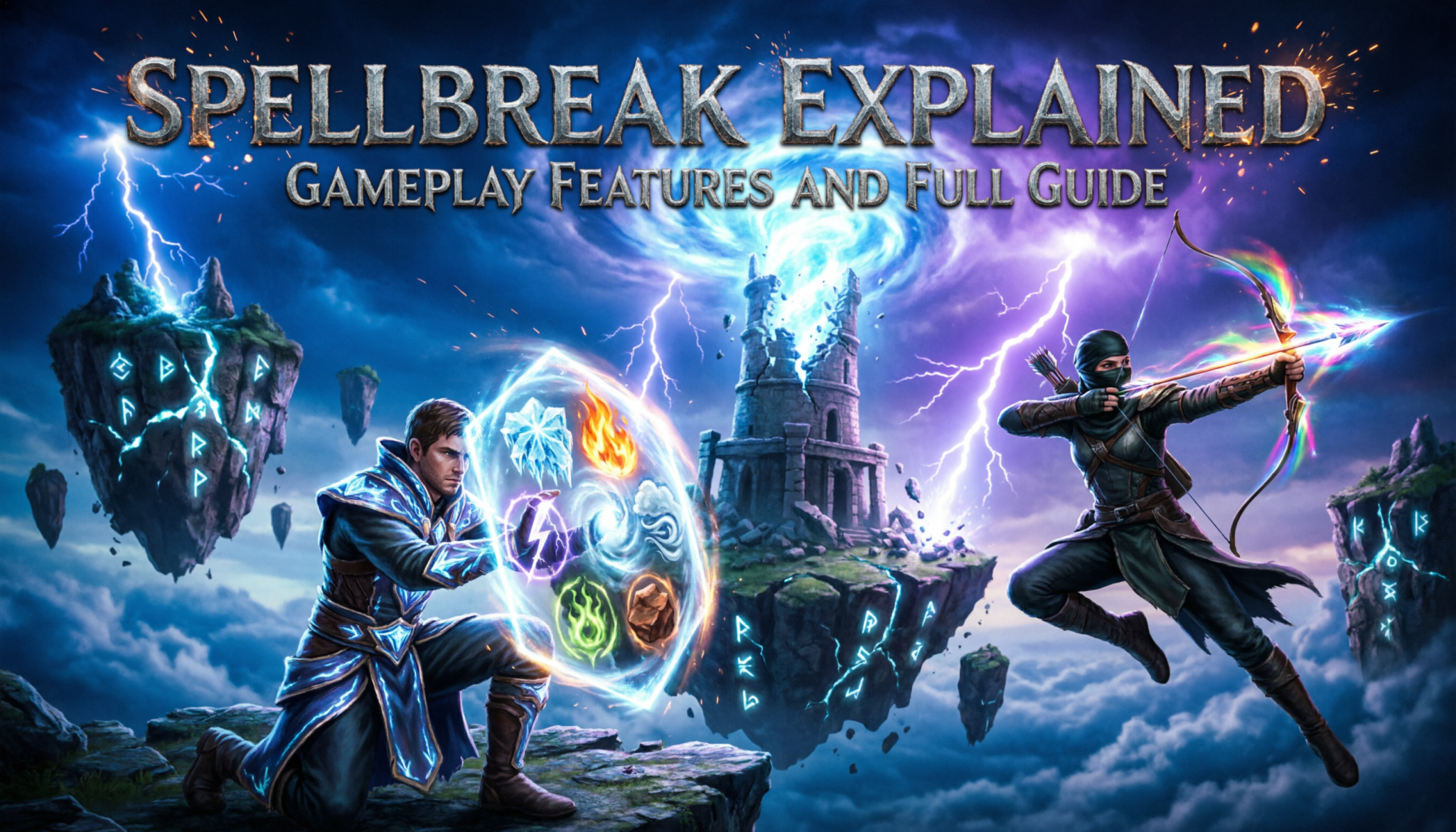
Spellbreak is a multiplayer battle royale game where players use elemental magic instead of guns to fight in fast-paced arena combat.
Spellbreak Gameplay Overview
Spellbreak is a third-person action battle royale game built around magic-based combat instead of traditional weapons. Players use enchanted gauntlets to cast elemental spells such as fire, ice, wind, stone, lightning, and toxic abilities. The main objective in every match is survival, where players compete in a shrinking arena until only one player or one team remains. The game focuses heavily on movement, timing, spell combinations, and smart positioning, making each match highly dynamic and skill based.
Core Gameplay Mechanics
The gameplay in Spellbreak is designed around fast-paced magical combat and constant movement. Players start each match by landing on a large map and searching for magical gauntlets and runes that give them different abilities. These gauntlets act as the main source of attack power, while runes provide special movement or utility skills such as teleportation, flight, or invisibility.
The game includes an armor system that absorbs damage before health is reduced, creating an additional layer of survival strategy. Mana is used as a resource to control spell usage, which prevents players from spamming abilities without planning. The shrinking storm forces players into tighter areas over time, which increases encounters and creates intense late-game fights.
Elemental Magic System Explained
The elemental magic system is the core identity of Spellbreak. Each gauntlet represents a specific element with unique combat behavior and tactical advantages.
Fire magic is designed for high damage and area control. It can create burning zones that deal damage over time and block enemy movement. Ice magic focuses on slowing enemies and controlling space through freezing effects, making it easier to restrict enemy movement and set up attacks.
Lightning magic is built for fast and aggressive gameplay. It allows quick strikes and can chain damage between nearby enemies. Wind magic provides strong mobility options, allowing players to move quickly across the battlefield or push enemies away during fights. Stone magic focuses on defense and heavy impact attacks, making it effective for close-range battles and protection. Toxic magic creates poison clouds that deal damage over time and help control areas of the map by forcing enemies to reposition.
Each elemental type interacts with others, which creates advanced strategic depth and allows players to develop powerful combat combinations.
Classes and Abilities System
Spellbreak uses a class-based system that adds extra layers of specialization to gameplay. Each class provides passive abilities that enhance specific playstyles. These abilities can improve movement, reduce cooldowns, increase elemental efficiency, or strengthen survival traits.
Players select their class before each match begins, which influences how they approach combat and strategy. While classes guide playstyle direction, the system still allows flexibility so players can adapt based on the situation during matches.
Battle Royale Structure
The main game mode follows a traditional battle royale structure but with a magical twist. Players enter a large map, gather equipment, and prepare for combat while the playable area gradually shrinks due to a magical storm. As the storm closes in, encounters become more frequent and intense.
Unlike shooter-based battle royales, Spellbreak emphasizes vertical movement and spellcasting. Players often fight in the air, teleport between locations, and use terrain to gain advantages. The final stages of each match focus on survival, positioning, and precise spell usage.
Additional Game Modes
Spellbreak also includes team-based and alternative gameplay modes. One of the most notable is Dominion mode, where two teams compete to capture and control specific zones on the map. This mode focuses more on teamwork and coordination rather than individual survival.
The game also supports custom matches, which allow players to create private sessions with friends. These matches are useful for practicing mechanics, testing spell combinations, and exploring different strategies without competitive pressure.
Movement and Exploration System
Movement plays a central role in Spellbreak’s gameplay design. Players can glide through the air, jump across terrain, and use runes to enhance mobility. Runes provide abilities such as teleportation, speed boosts, or temporary flight, which allow players to reposition quickly during combat.
The vertical nature of movement makes battles more complex and unpredictable. Positioning often determines the outcome of fights, and skilled movement is just as important as spell accuracy.
Spell Combination System
One of the most advanced features in Spellbreak is the spell combination system. Players can combine different elemental attacks to create unique and powerful effects. Fire combined with wind can create spreading firestorms that cover large areas. Ice combined with lightning can produce shock-based freezing effects that stop enemy movement. Toxic combined with fire can create explosive poison clouds that deal heavy area damage.
This system encourages experimentation and rewards players who understand elemental interactions. Many advanced strategies are built entirely around combining spells in creative ways.
Equipment System
Instead of traditional weapons, Spellbreak uses magical gauntlets as the primary combat tools. Each player can equip two gauntlets at the same time, allowing them to use two different elements during battles. This dual-element system is the foundation of combat strategy.
In addition to gauntlets, players can equip runes that provide special abilities and armor that increases survivability. These equipment choices influence both offensive and defensive strategies throughout the match.
Strategy and Gameplay Approach
Success in Spellbreak depends on strategy, awareness, and control of the battlefield. Players must learn how to combine elements effectively to maximize damage output. High ground advantage is important for visibility and control during fights. Managing mana usage is also essential, as it limits how often spells can be used in combat.
Players must avoid staying in open areas for too long, especially as the storm closes in. Learning proper timing for runes helps with escape and repositioning during dangerous situations. Movement mastery is equally important, as avoiding enemy spells often decides the outcome of battles.
Map Design and Environment
The maps in Spellbreak are designed with vertical exploration and dynamic combat in mind. They include floating structures, open fields, ruins, and tightly packed zones that support different combat styles. Some areas are ideal for long-range attacks, while others are better suited for close combat and ambush strategies.
The environment encourages constant movement and prevents static gameplay. Players must adapt to different terrains and use the environment strategically to gain advantages in fights.
Progression and Customization
Spellbreak includes a cosmetic progression system that allows players to customize their characters and visual appearance. Players can unlock outfits, visual effects for gauntlets, emotes, and other cosmetic items through gameplay progression.
The system is designed to be fair and does not provide gameplay advantages. All progression rewards are focused on personalization and visual expression rather than competitive power.
Shutdown and Community Presence
Spellbreak officially ended its live service after its servers were shut down in 2023. Despite the shutdown, the game continues to be remembered for its innovative approach to battle royale design. Many players still discuss its mechanics and unique magic-based combat system within gaming communities.
The game’s legacy remains strong because it introduced a completely different style of competitive gameplay that focused on elemental interaction instead of traditional weapons.
Legacy and Impact
Spellbreak is widely recognized for its creative contribution to the battle royale genre. It replaced firearms with elemental magic and introduced deep spell interaction systems that encouraged strategic thinking. Its emphasis on movement, vertical combat, and elemental combinations helped it stand out from other multiplayer games.
Even after its shutdown, Spellbreak continues to be referenced as an example
