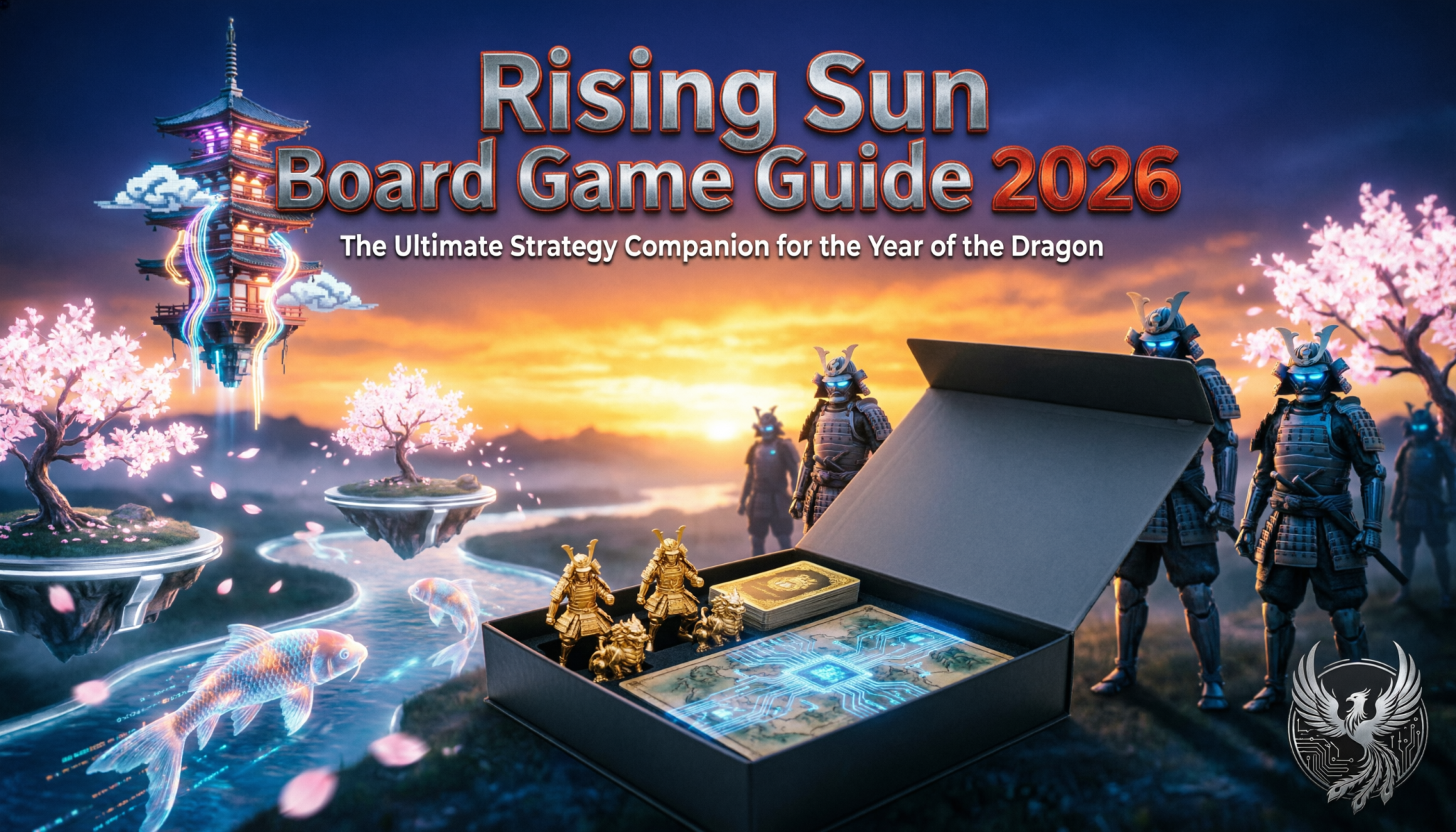
Rising Sun is a deeply strategic board game set in mythical feudal Japan where players lead powerful clans through politics, negotiation, and war for victory.
What Rising Sun Is
Rising Sun is a strategy board game for groups of players that combines diplomacy, area control, political negotiation, and tactical warfare in an immersive game of choices and conflict.
How Rising Sun Works
Rising Sun is played across three active seasons — Spring, Summer, and Autumn — with Winter used for final scoring. Each season has five phases: seasonal setup, Tea Ceremony, political phase, war phase, and seasonal cleanup.
Clan Selection
At the start, each player selects a clan with unique abilities and plots a strategy based on its strengths and weaknesses. Clans are ranked on an Honor Track, which helps determine turn order and tie-breaker situations in battles.
Seasons and Turns
Seasonal Setup: War provinces are revealed and coins are distributed according to seasonal income.
Tea Ceremony: Players form temporary alliances to gain mutual benefits during the political phase.
Political Phase: Players select political mandates in turn, gaining actions like recruiting units, harvesting resources, summoning monsters, or betraying allies. Choosing the right mandate at the right time is crucial for success.
War Phase: Conflicts are resolved in contested provinces. Players secretly bid war tokens, reveal them, and fight battles which can earn Victory Points or other rewards.
Seasonal Cleanup: Prepare for the next season by resetting certain elements and returning hostages.
Final Scoring
Once Autumn ends, players tally Victory Points from battles won, provinces controlled, seasonal objectives, honor rank, and other bonuses. The player with the most points wins
Bonsai
Japanese art of miniature trees
Core Components
Rising Sun includes high-quality components that enhance strategic play.
The game board shows the provinces of Japan. Miniature figures represent Daimyo, Bushi, Shinto, and monsters. Political Mandate tiles and season cards add variety. Victory point and honor tracks track progress. War tokens, coins, and tokens for terrain and resources complete the set.
Season Cards and Strategic Variety
The base game offers different season card sets that change how the game plays each session. Players can mix and match sets or randomize them for varied experiences. Season cards add unique powers, monster summons, and tactical twists that influence long-term strategy and replay value.
Expansion Options
Dynasty Invasion
The Dynasty Invasion expansion adds two new clans, the Sun and Moon clans, and Lucky Gods that act like alternative monsters with special abilities. This expansion increases maximum players to six, introduces new season cards, and enhances strategic depth.
Winning Strategies
Winning Rising Sun relies on a mix of negotiation, planning, and adaptability. Key strategy components include forming alliances wisely, managing resources and honor, tactical warfare, and using seasonal cards and abilities effectively.
Temporary alliances during the Tea Ceremony give bonus actions during the political phase and protective benefits during war. Alliances last only a season, so timing and trust are tactical tools as much as social ones.
Coins and honor are vital. Honor affects turn order and tiebreakers in battles. Investing early in ways to increase honor and income can give lasting advantages across seasons.
Battles determine control of provinces and generate significant Victory Points. Successful war tactics include smart placement of units, evaluating bids carefully, and capturing provinces that yield the most payoff.
Season cards and unique clan abilities, such as monster powers or specialized actions, can turn the tide when used at the right time. Familiarizing yourself with these effects helps you plan better moves each season.
Common Gameplay Tips
Play multiple games to learn timing and patterns, as Rising Sun can be complex for first-time players. Focus early on influence and income before major wars to build momentum. Monitor other players’ progress to block effective strategies or negotiate mutually beneficial outcomes. These gameplay tips help both beginners and experienced players improve their long-term success.
Player Count and Balance
The base game supports 3–5 players. With the Dynasty Invasion expansion, you can play up to six players, broadening social dynamics and negotiation strategies.
Balance shifts as player count changes. Games with more players typically involve deeper alliances and political negotiation, while smaller games focus more on direct competition.
